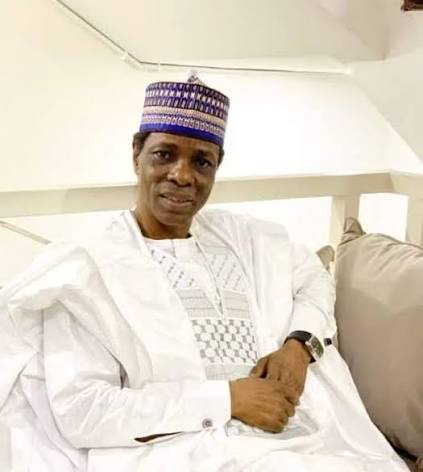
During a recent media interaction at the Lagos Area Office of the National Inland Waterways Authority (NIWA), the Chairman of the Governing Board, Alhaji Muktar Shehu Shagari, spoke extensively on the agency’s mandate, infrastructure renewal, funding, waterway safety, illegal jetties, fleet modernization, private sector participation, and plans to deepen inland water transportation. In this interview with Joshua Yousouph, he outlines the Board’s vision for transforming Nigeria’s waterways in line with the Renewed Hope Agenda of President Bola Ahmed Tinubu.
“Any vessel that does not meet acceptable standards will eventually have no place on our waterways”
“Our goal is to ensure that Nigeria’s waterways are managed by highly skilled professionals”
What vision has the new NIWA Board set for the Authority under your leadership?
The National Inland Waterways Authority was established with a very clear mandate. First, we are responsible for improving and developing inland waterways for navigation by ensuring that rivers and waterways are safe and navigable for boats and other watercrafts. Secondly, we are expected to provide an alternative mode of transportation for the movement of people and goods, thereby reducing pressure on roads and rail infrastructure. We are also responsible for implementing the inland waterways component of Nigeria’s national transport policy.
In line with President Bola Ahmed Tinubu’s Renewed Hope Agenda, our responsibility is to make NIWA a more effective institution that contributes significantly to national development. The President assembled highly experienced individuals on this Board, and we are determined to justify the confidence reposed in us by ensuring that NIWA becomes a major contributor to Nigeria’s economic growth and transportation development.
Stakeholders have raised concerns about the poor condition of some NIWA facilities, particularly at the Apapa area office. What is being done to address this?
One of the first directives we issued after our inauguration was a comprehensive assessment of NIWA’s infrastructure nationwide. We are not limiting our attention to Lagos alone; every office, jetty and facility belonging to NIWA across the country is under review. Any building that is dilapidated will be repaired, and any jetty that falls below acceptable standards will receive attention.
We have already made provisions in our budget to address these issues. A strong institutional image begins with quality infrastructure. Therefore, our focus is to ensure that all NIWA offices are presentable, our jetties are properly maintained, and new jetties are constructed where necessary. Lagos, for instance, needs more jetties than it currently has, because water transportation remains one of the cheapest and most efficient means of moving people and goods. We are also expanding infrastructure. You can already see ongoing construction projects designed to provide better office accommodation for staff and improve operational efficiency. These are practical steps towards creating an institution that reflects excellence and professionalism.
Funding has remained a recurring challenge for NIWA. How does the board intend to improve the Authority’s financial position?
Funding is critical because without adequate financial resources, it becomes difficult to execute major projects and achieve institutional objectives. However, we are approaching this challenge from multiple angles. While we continue engaging government on the need for adequate funding, we are equally focused on improving NIWA’s internally generated revenue.
The key question for us is: what can NIWA itself bring to the table? We are strengthening collaborations with relevant agencies, stakeholders, customers and private operators to enhance revenue generation and operational efficiency. We are not waiting solely for government allocations; we are working hard to improve our own financial capacity and sustainability.
Illegal and unregulated jetties continue to pose safety and regulatory challenges. How is NIWA addressing this problem?
This issue is receiving serious attention from the board. In fact, immediately upon my arrival in Lagos, discussions were held on strengthening enforcement through increased collaboration with the Police and other security agencies. We intend to provide additional support for our marshals so that they can enforce regulations more effectively and ensure compliance with established laws governing inland waterways operations.
The challenge is not only about enforcement; public awareness is equally important. The media has a major role to play in educating operators and the public about NIWA’s responsibilities and the need to comply with regulations. We have carefully studied many of the challenges confronting the sector and are working towards practical solutions that will improve safety and order on our waterways.
There have been discussions about providing support for boat operators to acquire newer and safer vessels. How far has NIWA gone on this initiative?
This is an issue that is very close to our hearts. During my visit, I personally observed some of the boats currently being used by operators, and frankly speaking, many of them are outdated and in poor condition. If we are serious about water transportation safety, then we must provide safer and more modern vessels.
We have already discussed this matter extensively. Where budgetary provisions are insufficient, we will engage the Honourable Minister to ensure adequate funding for the procurement of new vessels. Many operators have very limited capital and have continued using the same boats for years. As part of the Renewed Hope Agenda, we want to create opportunities that allow these operators to upgrade their fleets while enhancing passenger safety. We are also determined to remove unsafe and unserviceable vessels from operation. The safety of Nigerians is paramount, and we cannot compromise on that. Any vessel that does not meet acceptable standards will eventually have no place on our waterways.
Will NIWA collaborate with indigenous boat builders in this modernization drive?
Certainly. We are open to working with indigenous boat builders, provided they can meet the required safety and operational standards. Safety remains our primary consideration. Once quality and safety are assured, collaboration with local manufacturers is something we fully support.
Beyond acquiring new vessels, what other measures are being considered to improve safety on inland waterways?
Training is extremely important. Recently, during an overseas engagement, one of our priorities was exploring opportunities for capacity development. We intend to expose our personnel to modern training programmes; both within Nigeria and internationally. Without adequate training, it becomes difficult to keep pace with global best practices and technological advancements.
We will continue building a strong case for annual budgetary provisions dedicated to vessel acquisition, safety enhancement and personnel development. Our goal is to ensure that Nigeria’s waterways are managed by highly skilled professionals operating within a modern and efficient transportation system.
What role does the private sector have in developing Nigeria’s inland waterways?
The private sector is a critical partner in our plans. However, before we can attract large-scale private investment, we must first ensure that our rivers and waterways are safe and navigable. Activities such as dredging, clearing obstructions and maintaining channels are essential to making waterways commercially viable.
Water transportation is significantly cheaper than road transport. If our waterways become fully navigable, the cost of moving goods will reduce considerably, which could ultimately help lower food prices and improve the movement of cargo across the country. At the same time, this will reduce pressure on Nigeria’s roads and extend the lifespan of road infrastructure. We are therefore collaborating with private sector stakeholders to unlock the economic potential of inland waterways. Achieving this objective requires support from government, investors, the media and the general public.
How do you intend to sustain the safety reforms initiated by the Minister of Marine and Blue Economy and previous NIWA management?
We fully acknowledge and appreciate the work done by the Honourable Minister and previous NIWA leadership, particularly in promoting life jacket usage, restricting unsafe night travel and discouraging the use of unsafe boats. Those initiatives have laid a solid foundation. Our responsibility is not to reverse those gains but to build on them. We are pursuing a strategy that combines stricter enforcement with practical alternatives. For instance, while we intend to phase out unsafe and rickety boats, we also recognise that operators must have access to safer replacements. That is why we are making provisions to acquire modern vessels and support fleet renewal.
To improve compliance, we will strengthen collaboration with the Police, recruit and train additional marshals and intensify monitoring activities. We are determined to ensure that regulations are not only enacted, but effectively enforced. With the support of the Minister, stakeholders and the media, we believe NIWA can achieve even greater success in promoting safety and efficiency on Nigeria’s waterways.
What message would you like to leave with stakeholders and Nigerians?
Our mission is clear: to make Nigeria’s inland waterways safer, more efficient and more economically productive. We want to modernize infrastructure, strengthen regulation, improve safety standards, attract investment and create a transportation system that supports national development. But this cannot be achieved by NIWA alone. We need the cooperation of government, the private sector, the media and the public. Together, we can transform Nigeria’s waterways into a major engine of economic growth and national prosperity.