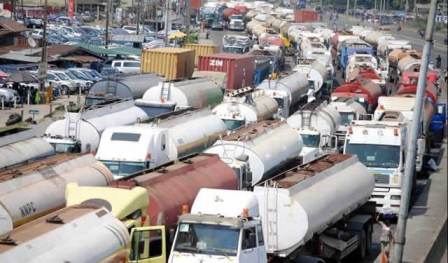
There is an unmistakable and deeply-troubling resurgence of traffic gridlock along the access roads leading to the Lagos Ports, particularly the Apapa and Tin Can Island ports corridors. This development is not only regrettable, but also entirely unacceptable, given the significant investments, policy interventions, and infrastructural improvements that had been made to eliminate precisely this problem. The situation today raises urgent questions about what has gone wrong and why a problem that was once largely contained is re-emerging with such force.
It is important to recall that there was a time when access to the Lagos Ports was virtually impossible. The roads were in a deplorable state, gridlock was endemic, and trucks routinely spilled into adjoining communities, disrupting economic and social activities as well as routine daily life.
However, through deliberate government intervention, supported by stakeholders in the maritime and logistics chain, the access roads were rehabilitated, a more efficient traffic management systems were introduced, and sanity gradually returned to the ports’ environment. One of the most significant innovations during this period was the introduction of the electronic call-up system, designed to regulate truck movement and prevent indiscriminate access to the ports.
The Electronic Call-Up system (Eto) managed by Truck Transit Parks (TTP) delivered significant improvements to traffic management around the Lagos Ports at its peak. It helped to drastically reduce the long-standing gridlock along the Apapa and Tin Can Island corridors by introducing a structured scheduling system that regulated truck movement into the ports. This brought order to previously chaotic access roads such as Apapa Wharf Road, Ijora, and Liverpool Bridge, ensuring that trucks moved only on approved schedules rather than flooding the port axis indiscriminately. The system also improved the use of designated truck parks, which became effective staging points for trucks before accessing the ports, thereby reducing congestion around the terminals.
Beyond traffic decongestion, the system introduced transparency, predictability, and data-driven management into port haulage operations. It reduced human interference and informal racketeering in truck scheduling, while improving coordination among stakeholders in the port logistics chain. Operational efficiency improved through reduced truck turnaround time and better cargo evacuation processes, which in turn supported faster vessel operations and reduced dwell time. Safety conditions also improved due to the reduction of indiscriminate truck queues on public roads, and the availability of real-time data further strengthened planning and monitoring within the system.
Today, however, that progress appears to have been eroded. The resurgence of congestion suggests a systemic failure in the effectiveness of the electronic call-up system. If indeed the system is still operational, then its inability to control truck movement efficiently points to serious operational lapses that should not be ignored.
A functional e-call-up system should regulate, sequence, and ensure orderly movement of trucks into designated truck parks before dispatching them to the ports. When this mechanism breaks down—or is allowed to weaken—the result is predictable: disorder, congestion, and a return to the chaotic scenes that once defined the Lagos port access roads.
This is particularly concerning because, not too long ago, the same system was being commended for its relative success. In a previous Editorial Opinion published by Shipping Position Daily, we acknowledged the improvements recorded under the electronic call-up system and noted that its performance was strong enough to justify the renewal of its concession arrangement by the relevant authority.
In that opinion, we had urged the Federal Government, through the Nigerian Ports Authority (NPA) to take a clear position on this matter. Yet, the silence and apparent lack of decisive engagement from the authorities have left a vacuum although not justifiable to now manifest in operational inefficiencies.
What makes the current situation more troubling is that the earlier gains have not only stalled, but are now being actively reversed. The e-call-up system, which once helped account for and regulate trucks approaching the ports through designated pre-gates and truck parks, appears to have lost its effectiveness. The orderly sequencing of trucks, which was a key feature of the system’s initial success, is no longer consistently visible on the corridors. The resukt is the chaos that is now noticeable along the two approaches to Lagos ports.
It is also important to highlight a critical but often overlooked aspect: the availability and functionality of truck parks. Several truck parks, constructed through substantial private sector investments, now lie underutilised. For instance, truck parks along Liverpool Bridge and Ijora, which were once integral to easing congestion, are reportedly operating at far below capacity. Even along the Ijora axis, visible infrastructure such as the park located by the bridge appears underutilised despite the ongoing congestion on surrounding roads. This raises a fundamental question: why are facilities designed to decongest the port access roads not being effectively integrated into the current traffic management system?
While the congestion may not always be visibly severe in the afternoons, it must be stressed that port operations are not part-time. Lagos ports must truly function on a 24-hour basis, and access roads are expected to remain fluid and functional at all times to support continuous cargo movement. Any system that only appears effective at certain periods of the day is inherently flawed, as it will fail to meet the demands of a round-the-clock maritime logistics hub.
Another disturbing dimension to this resurgence of gridlock is the growing presence of petroleum product tankers and other heavy-duty trucks, many of which operate with little or no structured parking arrangement. In the absence of a fully functional call-up system and adequate enforcement, these vehicles often queue indiscriminately along access roads, worsening congestion and creating bottlenecks that disrupt port access. This chaos, not only undermines efficiency, but also raises safety concerns for other road users and nearby communities.
Perhaps, the most glaring confirmation of the troubling situation is the re-emergence of both state and non-state actors masquerading as traffic enforcement agents. This lawlessness has provided a haven for extortion of drives and owners of articulated vehicles.
The Federal Government, the Nigerian Ports Authority, and all stakeholders in the port logistics chain must treat this resurgence with the urgency it requires. It is not enough to celebrate past successes or acknowledge previous improvements; what matters is sustaining those gains and strengthening the systems that made them possible. The electronic call-up system, if still in operation, must be thoroughly reviewed, strengthened, and enforced with greater discipline and transparency. If it has failed in parts, then corrective action must be immediate and decisive.
Lagos ports are too critical to Nigeria’s economy to be left vulnerable to avoidable inefficiencies, while its approaches are governed by non-state actors. The resurgence of gridlock is not just an abnormality; it is a direct threat to trade facilitation, logistics competitiveness, and the country’s broader economic ambitions.
It is therefore imperative that all stakeholders act swiftly to restore order, reinforce accountability, and ensure that the hard-won gains of the immediate past years are not allowed to dissipate into another era of chaos on the port access roads.