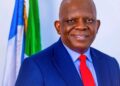
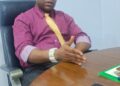
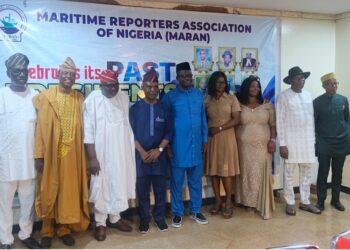
In this exclusive interview conducted during a recent visit to the secretariat of the Maritime Reporters Association of Nigeria (MARAN), the President of the National Compliant Joint Task Force of Licensed Clearing Agents (NCJTFLCA); Dr. Basil Nwolisa, spoke candidly about the organization’s mission, its battles against corrupt practices, its friction with established associations, and the urgent need for strategic collaboration with the media. He sheds light on the man-made bottlenecks confronting port users, the dramatic reduction in illegal checkpoints as claimed by the Task Force, ongoing advocacy efforts within government, and the sacrifices required to challenge the systemic decay in the maritime industry.
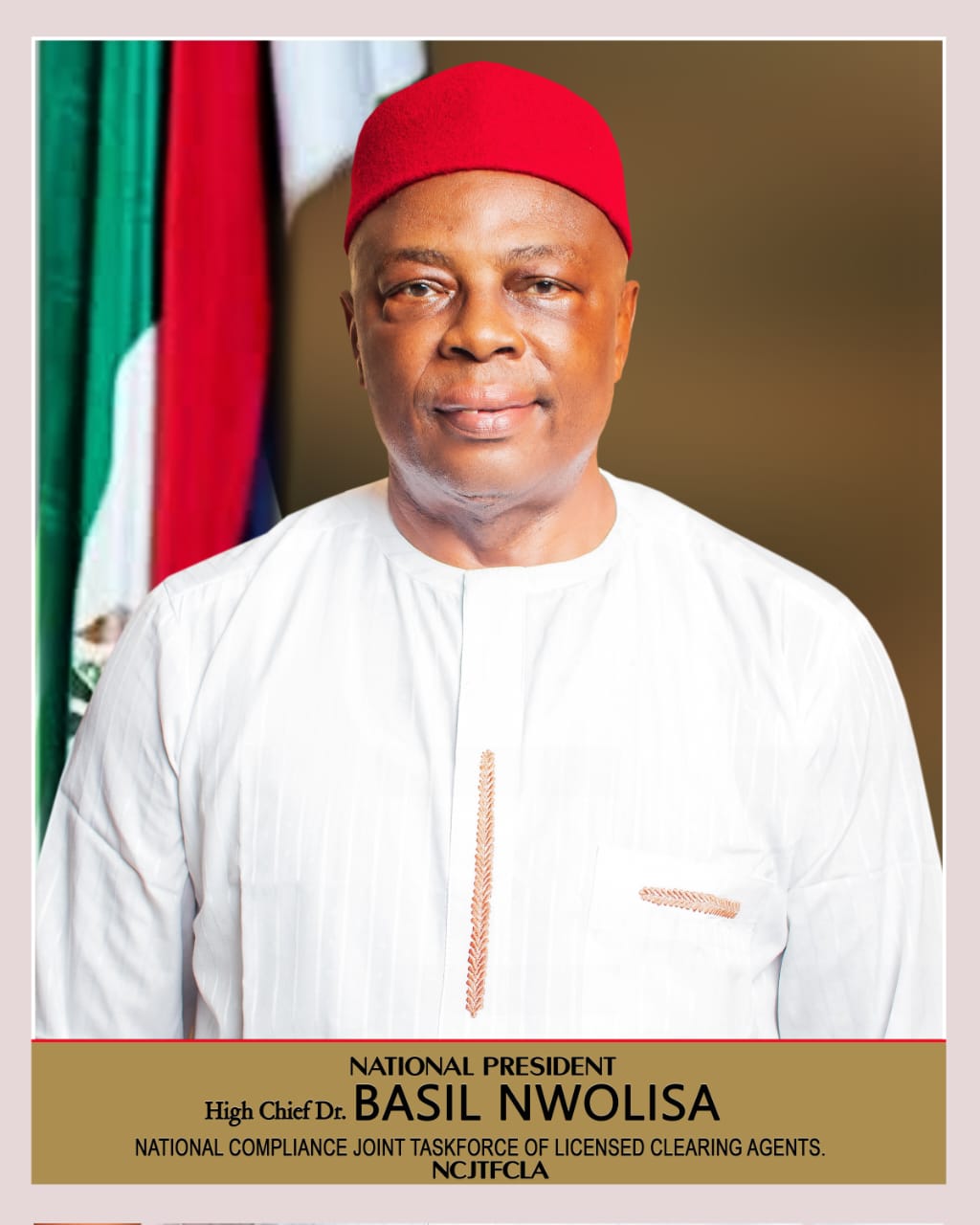
“We are not appointed by individuals; we are registered by law and recognized by government”
“Today, what we have are people using association leadership to enrich themselves……”
Can you tell us why you felt the need to interact with maritime reporters at this time?
I’ve been longing to organize this kind of meeting to interact with you people, being that MARAN is the premier association in the maritime reportage, But due to my moves, travels and journeys across Nigeria to make the National Compliant Joint Task Force known, and our objectives known across Nigeria, I’ve not been in Lagos for quite a while now. So it is a great pleasure for me today to be in your midst, and I thank God for making this day a reality. The purpose of our visit is multifaceted. First, we are here to invite you to the third anniversary celebration of the National Compliant Joint Task Force scheduled to take place at Rockview Hotel, Festac Town, on Wednesday 10th December 2025. That event will also highlight other issues like the birthday celebration of the President and the inauguration of two or three of our chapters nationwide. We are using this opportunity to invite you, and we want your presence and active participation. Beyond that, we are here because we need partnership. Partnership that will bring issues to the fore.
Before we go into the details of the partnership, you spoke earlier about serious challenges facing the Nigerian port system. Could you elaborate on those challenges as you see them?
The Nigerian port industry is currently facing numerous man-made challenges, primarily stemming from human weaknesses. The most pressing issues include non-compliance with established rules, extant laws and regulations, such as a large system imported by customs, deliberate withholding of container deposits refunds by shipping companies, frequent arrest and seizure by the FOU of Customs of containers duly examined and released by authorized customs officers at their terminals, and other federal government agencies’ delays experienced by customs clearing agents at the ports in the hands of these people, and also extortion of truck drivers by staff of Nigerian Port Authority, their appendages and their employees. These challenges have become an embarrassment to our country before the international trading community.
To address these issues, the National Compliance Directive was established to help Nigerians overcome corruption in the maritime industry and on our highways. Recall that the President of this organization published a book; that book is highlighting the problem being created by illicit checkpoints all over Nigeria that is making the prices of goods and services to skyrocket. You recall that anytime you are traveling to the east, west or anywhere in Nigeria, especially the east-west road to Port Harcourt, you see hordes of men and women creating difficulty for Nigerians, to the extent of beating drivers, to the extent of extorting them and all that.
How exactly is your task force responding to these problems?
We have been able to put some issues in place. For example, you can now travel from Lagos to Port Harcourt with only five Customs checkpoints, from about 23 when we started. And from Lagos Mile 2 to Seme border, you will now see only the two recognized Customs checkpoints. Any other one is a criminal enterprise, and when it gets to us, we will deal with that issue the way we dealt with others.
You’ve made a strong appeal for partnership with the press. Why is the media so important to your work?
This is because fighting corruption in Nigeria is like swimming against the tide. You fall inside the ocean where the tide is coming, and you are surging up against that tide. It’s terrible. And people will always say, “don’t mind him, he’s trying to take his own share.” That narrative exists everywhere. Anybody trying to fight corruption is suspected of trying to be recognized, so that he too will be part of the sharing formula. But I assure you that the National Compliant Joint Task Force is far from that. With the little resources we have, we will continue to do our best to make sure the right thing is done. And in the next 12 months, every Nigerian including MARAN will be proud of our achievements. That is why we are here begging you for partnership. We cannot do everything. When you see issues, publish them. Let the public know the truth.
There have been questions raised about checkpoints. Let me ask directly, how many approved checkpoints currently exist on the Mile 2–Seme corridor?
There are only two approved Customs checkpoints at Agbara and Gbaji. Any other one is illegal. If you see more than two, it is your duty as journalists to publish it. That is how we will confront what is happening. We personally cannot be flying up and down the roads to ensure compliance and fight irregularities. That is why your partnership is crucial.
Are you affiliated with ANLCA or other associations? Some people say your members are drawn from various associations.
We are not related to ANLCA. We are a pressure and advocacy group fighting for the survival of the industry. ANLCA is a premier association that has refused to do perform their duty as a premier association. Our members belong to ANLCA, to NAGAFF, to AREFFN, to others, but we are not an association. We are a task force validated by our registration with the Corporate Affairs Commission and recognized by the DSS, EFCC, ICPC, Police, Presidency, and the Secretary to the Government of the Federation.
If you are not an association, then who funds your operations? Where do you derive your power of enforcement?
We are not enforcing anything. If you commit an offence now and we have evidence, we will call the police and they will definitely come. We have made proposals to the government—for example, by next year you will see our checkpoints having CCTV cameras. There must be CCTV cameras at any checkpoint anywhere in Nigeria. We have representation in the Senate, in the House of Representatives, and the SGF has our proposal. We are standing for the soul of Nigeria, not our pockets. We are not obliged to romance anybody. We are not appointed by individuals; we are registered by law and recognized by government institutions. That is our strength.
You made strong statements about the suffering of clearing agents. Why is this fight so personal for you?
This is because this industry is dying. I see clearing agents suffering, dying of hunger because they cannot afford a meal. In this part of the world, no business was respected like clearing and forwarding in the last ten years. Today, what we have are people using association leadership to enrich themselves while their members are suffering. This is not about me. It is not about trying to be safe. I am safe already, because we are representing God in this battle, not man. Anybody that challenges us physically or otherwise knows what God does with such a person.
Finally, what should Nigerians expect from your task force moving forward?
Expect consistency. Expect truth. Expect that we will not sit down and “kill and bury”—because kill and bury technology is where you slaughter a cow in the night, eat the flesh and bury the bones, so nobody knows what happened. That secrecy is why corruption thrives. We are here to expose what is wrong, not to cover it. You will hear it, you will see it, you will feel it. With your support as the greatest power of the press in Lagos ports today, we will salvage this industry and launder the image of our nation.