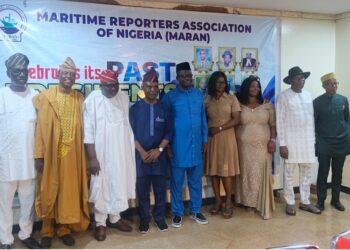
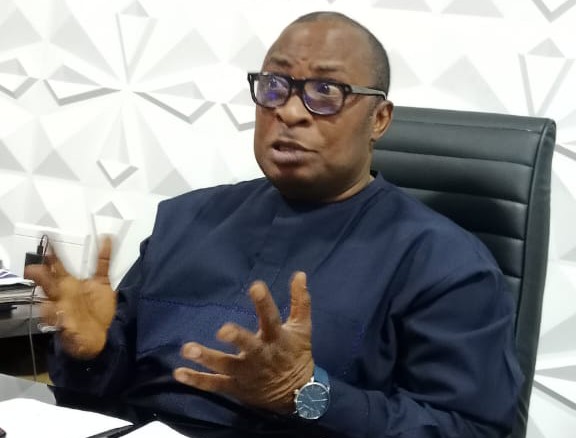
Dr. Kayode Farinto, former President of the Association of Nigerian Licensed Customs Agents (ANLCA), has been a consistent voice in Nigeria’s maritime sector. In this exclusive interview with Oluyinka Onigbinde, he speaks candidly on burning industry issues—from the controversial $300 duty-free threshold to automation of overtime cargo clearance, the dominance of foreigners in freight forwarding, Customs reforms, and the underperformance of Nigeria’s blue economy. Farinto, who has witnessed the sector’s evolution over decades, insists that unless bold reforms are implemented, Nigeria risks losing both competitiveness and sovereignty in the blue economy.
· “Duty free threshold should be raised to between $500 and $1,000”
· “The CRFFN Registrar needs the governing council to complement his work”
The new $300 duty-free threshold for imports has raised concerns among stakeholders. What’s your take on it?
I find the decision out of tune with global practice. In Europe, the minimum ‘de minimis’ value is about 1,000 euros or dollars. In the United States, it is even higher. Here in Nigeria, government says $300—which, when converted to Naira at today’s rate, is barely ₦250,000. That is not realistic for an import-driven economy like ours. Think about it: even simple souvenirs for family members abroad could exceed that amount. A wristwatch, a pair of shoes, or a few electronics already cross the threshold. So, what government is saying indirectly is that almost everything that comes in will attract duty. This policy is anti-trade and insensitive to the realities of our weakened Naira. At the very least, the threshold should be raised to between $500 and $1,000. That way, we can encourage genuine imports without stifling people. Everywhere in the world, there’s a duty-free threshold, but Nigeria is setting one of the lowest in the world. And importantly, let me emphasize that this has nothing to do with e-commerce, contrary to what some people think. E-commerce will continue whether or not this threshold exists, because that is a different conversation entirely.
The Nigeria Customs Service recently announced plans to automate overtime cargo clearance. Do you support this?
Automation is a welcome idea in principle, but timing and execution matters. What Customs is proposing now is like putting the cart before the horse. We are still struggling with our existing platform, NICIS II. That system has serious glitches. Many times, an agent pays duty and the payment fails to reflect in Customs’ system for days. That delay attracts demurrage, storage fees, and other unnecessary charges for clearing agents and importers.
So my position is simple: before we talk about automating overtime cargo, let us perfect our current system. Automation should enhance efficiency, not worsen inefficiency. In countries like Singapore or even Ghana, automation means cargo can be tracked from ship to warehouse without manual bottlenecks. Here, if your payment doesn’t reflect, you are stuck. Unless Customs fixes these fundamental problems, talk of automation is just premature.
Some officials argue that importers deliberately abandon cargo at the ports. What is your view?
It may happen, yes, but only in isolated cases. Sometimes multinationals with excess raw materials in stock may leave cargo at the ports temporarily. But to generalise and say “importers deliberately abandon cargo” is wrong. We must always base policies on data, not assumptions. Even, if some importers abandon cargo, is that the reason our system fails? Is that why duties are not reflecting? Is that why clearance delays run into weeks? No. Those are systemic issues, not the fault of individual importers. Unfortunately, government sometimes uses these isolated cases as excuses to justify poor systems. That narrative is misleading.
The Finance Minister recently ordered suspension of the controversial 4% FOB valuation. Was this a right move?
Absolutely. I have always said that the policy cannot work. The idea of slamming a 4% FOB surcharge on top of existing duties and charges is counter-productive. It discourages trade, reduces cargo throughput, and ultimately shrinks government revenue. Suspension is not the same as cancellation, but it’s a good first step. Going forward, government must go further. We need to review the entire structure of import charges. For instance, the 7% surcharge and 15% levy are killing trade. If government really wants to cushion the effect of this suspended 4% surcharge, those levies should be removed. As it stands, Nigeria is one of the most expensive places to do import business in West Africa. That is why cargo is diverting to Cotonou and Lome.
Customs recently promoted over 3,000 officers—the highest in recent years. Do you see this as positive?
Promotion is always good if it is based on merit and due process. We should not always see everything negatively. There is about to be a vacuum at the top, because a number of senior officers are retiring soon. So it is logical to push people up to fill those gaps. Also, Customs has its internal disciplinary mechanisms. They may not always publicise it, but officers who fall short are usually dealt with. So, I see this round of promotions as necessary. It boosts morale within the Service. I congratulate those promoted, and I only hope they live up to the trust placed in them.
You were once a member of the Shippers Association of Lagos State (SALS). Are you still active there despite the leadership tussle?
Of course I am still a member. The so-called crisis was really about one individual, who tried to form a faction without members’ mandate. The court has already ruled that he is not a member of SALS. That matter, as far as I am concerned, is settled. We must not allow personal ambitions to destroy institutions.
One of your strongest advocacies has been against the growing dominance of foreigners in Nigeria’s freight forwarding sector. How serious is this problem?
It is very serious. In fact, I call it an existential threat. Multinationals are gradually taking over cargo that is legally reserved for Nigerians. Take CCECC, for example. They came in to build railways, but now they run a full-fledged clearing and forwarding department. Shipping lines like MSC also operate clearing arms. This is unacceptable. By law, foreigners should not be registered as Customs brokers in Nigeria. But because of loopholes and weak enforcement, they find ways around it. And let me warn: if this trend is not checked, it could even lead to xenophobic tensions in the industry. Nigerian freight forwarders will not sit back and watch their livelihoods eroded by foreigners who already dominate shipping lines and terminal concessions.
Shouldn’t this matter be escalated to the National Assembly?
The National Assembly has already legislated on this. The Customs and Excise law clearly prohibits foreigners from practising as Customs brokers. The problem is weak enforcement by the executive. That said, we may still need amendments to tighten the loopholes. For example, we could make it mandatory that Nigerians must hold majority shares in any company with foreign involvement in freight forwarding. This is what countries like South Africa do to protect strategic industries. Why can’t Nigeria do the same?
It’s one year since the Registrar of the Council for the Regulation of Freight Forwarding assumed office. How do you assess his performance so far?
It would be unfair to assess him now because the governing council is not yet in place. As a civil servant, his powers are limited. Once the council is reconstituted, then we can have a proper yardstick to measure performance. The Registrar cannot carry the weight of an entire industry alone. He needs the governing council to complement his work.
How would you assess Nigeria’s blue economy sector, one year after creating a full-fledged ministry?
Frankly, it is disappointing. When the Ministry of Marine and Blue Economy was created, many of us were optimistic. We thought finally, Nigeria would harness its vast aquatic resources, diversify its economy, and create jobs. But so far, the ministry has been reduced to talk shows and foreign trips. Our waterways remain under-utilised. People still travel in unsafe canoes. Maritime tourism is non-existent. Fishing potential is largely untapped. And meanwhile, government spends taxpayers’ money junketing abroad, attending conferences, with nothing to show back home. Look at countries like the Philippines—they make billions from blue economy activities, from shipping manpower to fishing and tourism. Nigeria has far more potentials, but there are zero results. For me, the intention behind creating the ministry has been defeated. Unless government refocuses, the blue economy will remain a wasted opportunity.