The Tin Can Port Chapter Public Relations Officer of the Africa Association of Professional Freight Forwarders and Logistics of Nigeria (APFFLON), Mr. Clinton Okoro in this exclusive interview with Joshua Yousouph, shares deep insights into the state of Nigeria’s maritime sector in 2025, Speaking candidly on industry challenges, policy inconsistencies, automation setbacks, and the anticipated launch of the National Single Window, Okoro provides a grounded assessment of the year’s developments. He also evaluates his association’s impact, the reforms within CRFFN, and the expectations for 2026, offering a rare, insider perspective on issues shaping trade facilitation and freight forwarding in Nigeria.
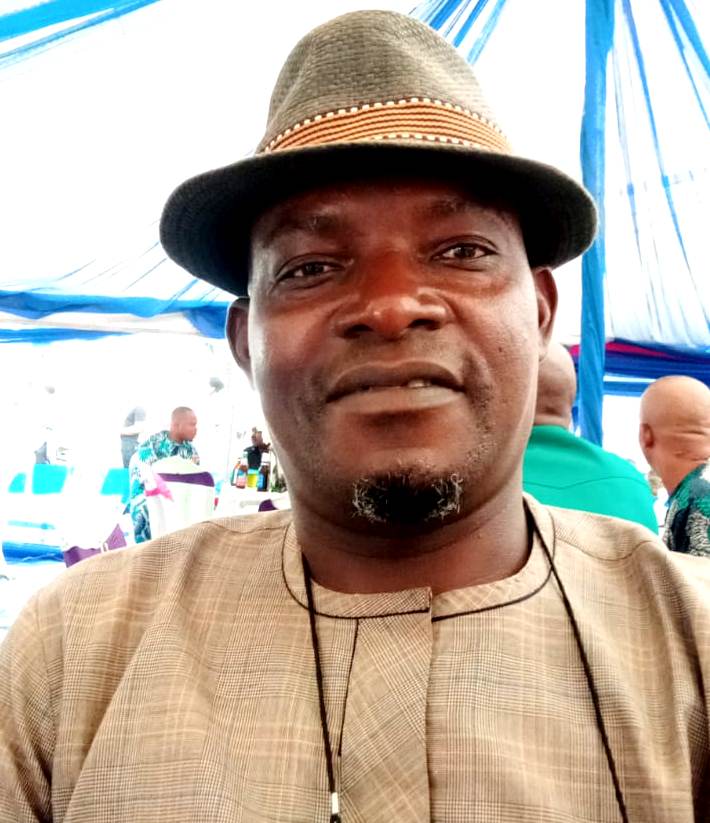
· “The National Single Window will help simplify the process of clearance of goods in the port”
· “APFFLON has made a very big impact. We have made a very big impact in the industry in 2025”
In a few weeks the year will be over. How can you assess the maritime industry in 2025?
Well, we thank God for life first of all. Then we also want to say that we thank the government of the day and all the participants that are involved in the maritime industry. What we are doing is just to see how we can make things work out in the maritime industry. When we come to assess the activities of 2025 in maritime, we say that we have a little improvement based on the policies that were coming in from the government. But the truth is that we didn’t find it funny at all. The B’Odogwu thing that started late last year really gave us a lot of issues this year, and we are still talking about that. If you remember, last year they also came up with the issue of the 4% FOB levy. Somehow, this year when they came up with it, it was suspended, but somehow the thing resurfaced and people cried very loudly to the extent that it took the Minister of Finance to give them an ultimatum. We all saw that; everybody saw the letter. But somehow, that FOB is still existing today. So, when you talk about the economy, the economy was very tough on Nigerians. Everybody had it very tough. So I don’t think, if we were to assess the activities of this year, people will want to tell you that we have not really done well. The only thing, like I said when I started, is that we have to thank God that we are still alive.
You made mention of the issue of B’Odogwu and the likes. How will you assess the level of improvement in automation processes in our ports this year?
When you come to the automation system, yes, we can applaud them on the level of automation. But the only issue we are having is the issue of network, whereby you are expected to do your work probably under 24 hours, but you find out that by the time you know it, the time will elapse to almost 48 hours or more because of the automation system. But the truth remains that that is where we are going. There is no going back. Automation is just the real deal. We have to work little by little to get it right. But that is the main thing. B’Odogwu is an indigenous thing. We have teething problems, the challenges were there, even up till now, because we have to face the facts. We are still struggling to see how it can be. Customs, like I said, they keep coming up with all these new policies. Just the other day, one of the innovations that came up was the “one-stop shop,” whereby they are looking at clearance of goods in the port within just 24 hours. But of course, we know the issue we are having is human interface. That is where automation comes in. The shipping companies and everybody is trying; the terminals, everybody is trying to get into it, so that things can be easy. So yes, automation is good. We have moved into that somehow, and we will get there.
Talking about automation, one major development is the National Single Window project, which is expected to kick-off in the first quarter of next year. Are you optimistic about it?
The National Single Window is ideal. It will help simplify the process of clearance of goods in the port. What the federal government is looking at is how to simplify clearance of goods whereby all the agencies involving everybody will be on one page. Those are some of the questions we asked during the one-stop shop launching of Customs just last month. But thank God they all agreed that the national single window supersedes that of their own programme. I believe, if by the grace of God that comes up, one will see a level of transparency. It will also reduce the human interface that we are talking about. But you know the system in Nigeria, we are just praying that people will not sabotage the effort of the government. Because I think the FIRS are at the head of the single window. So I don’t know whether maybe there’s going to be a level of supremacy on who is going to be in charge and all that. But the truth remains that we are expecting it to start. We know we’re going to have some teething problems too, just like we have been having in other ones that have been introduced. But if it stays, it will be a little better than what we’re having now.
Now let’s talk about your association. APFFLON is one of the pressure groups in the freight forwarding sector. How will you assess its impact in the maritime industry?
We have done well. It might not be 100%, but if you go around, they will tell you that APFFLON, even though you call it a pressure group, are just like a bridge between the stakeholders and government agencies, whereby we believe in roundtable discussions. We don’t believe in anything that will bring up an uproar in the system where people are being booed and all those kinds of things that used to be in existence before now. APFFLON is a peaceful association. Anything that comes up, we always want to follow it up with due process. We have intervened in many areas in the industry. When the B’Odogwu was giving issues, we related very well with the government. Also, on the issue of the single window, APFFLON is really on top of it. We are hailing government for bringing up that idea. We have not in any way fought any system. All we are saying is that there should be a system that will work and make things move in a way that practitioners will enjoy doing their business seamlessly. Because all we are trying to do in the industry is to see how we can facilitate trade. Anything that works against facilitating trade, we first approach the agency where that delay is coming from. And if it is not done well, we will cry to the highest authority to make sure things are done well. So APFFLON has made a very big impact. We have made a very big impact in the industry in 2025.
APFFLON is recognized in the industry, but it is yet to be registered by CRFFN. Why do you think this is so?
If you look at what has been happening in CRFFN, there have been a great level of issues, even with other associations that are registered with CRFFN. Before now, I would call it politics, whereby some associations weren’t comfortable with the level of development in APFFLON. So they were trying to do that. But since after the new Registrar, Mr. Kingsley Igwe came in, you could see that the guy had been trying to clean up the mess that was in CRFFN. But the truth is that we have a very cordial relationship with CRFFN, both with our president and the other national officers of APFFLON. Even myself, I have a close relationship with him. He said he is not for any association. Even the accredited associations, many of them have backed out of some activities in CRFFN. You can see some people sabotaging the system such as the issue of the POF, taking them to court to stop it and all that. In APFFLON we are just there making sure that there will be peace. Because that is supposed to be the regulatory body of all freight forwarders.
How will you assess the tenure of the CRFFN Registrar?
Before now, we have been calling on government to do the right thing by allowing professional freight forwarders to drive the process of CRFFN. But I think since they deemed it fit and brought in a practitioner, somebody who has been in the field, who knows all that is happening in the industry. You can see that the era of fraud everywhere, corruption, where people are interested in buying Hilux Jeeps and all that has gone. Administratively, the new Registrar has done well. He has done well and I believe he will still do more.
There is also the issue of POF and SW Global saga. The contract has been terminated, but they have refused to let go of access. How would you advise CRFFN to go about this?
Well, that has been the major issue that brought CRFFN to where they are. There are many other things you might not know apart from the remittance issue. The truth is that if you look at that era, even paying salary to the staff of CRFFN was a big problem. Some of us were asking: What is happening with all the money coming into POF? And we were shocked. If you come closer, you will be very shocked that even the sharing ratio is surprising. The agency helping with the collection have some percentage they were taking. We also learned that some of it was going to some people in the National Assembly. And by the time you know it, it will be peanuts that will come into the purse of CRFFN. That was why they weren’t having enough to even pay staff salary. But my brother, all that too will soon fizzle out. If you have been following what is happening, especially with the single window thing we talked about, CRFFN is playing a major role. In fact, that is the focus point of the Registrar, whereby CRFFN is going to go beyond the roles they used to regulate before now. So by the time that starts, I think by the grace of God all these issues of POF and the people collecting for them will stop.
One major challenge is that the Council does not have a Governing Board. The last one was dissolved. There has also been the complaint that the board is too large. How do you think this can be addressed?
That is an enabling Act matter. They have to go back to the Act to look at that. Before now, what caused the problem was that they used to have allocation from the federal budget and everybody was interested in that, wanting to go into the board so they would be given a Hilux and all that. Honestly, they were not doing anything there, other than to go and see how they can cut into the national cake. But when the federal government stopped that allocation, the whole thing you found that they weren’t doing anything. Most of them came back to Lagos and joined us back in the field. But with this single window project coming up, CRFFN is going to fit in very well. And I believe the allocation will come. Then the Act will have to be revisited. They will have to look at it. Those that are to be on the board will know themselves. So when it is time to do elections, we will know what they are doing.
Recently, the President signed the Nigerian Insurance Industry Reform Act, abolishing container deposit collections and replacing it with container insurance. What is your take?
Well, that is a World Trade Organisation policy. It’s just that things are not done normally in Nigeria. Before now, some of us have been crying over that. Before the signing of the insurance policy by the President, it was CMA that first stopped collecting container deposits. That is the only shipping company that first stopped. But others are still doing whatever they like. But this single window thing is going to open the eyes of Nigerians. Because this policy is embedded in the single window. By the time the single window starts, there won’t be anything like that. We will now move solely on that insurance policy.
Finally, what are your recommendations for the industry looking into 2026?
Let me go straight to Customs. Customs is coming up with new policies almost every day. The last time, sometime last month, when they came with this last one-stop shop, I told them at that meeting that they should take it easy. Let’s try to implement whatever new idea they bring. The whole idea, yes, is to facilitate trade, which I know the CGC is doing his best. But when we look at the Standard Operating Procedure (SOP) that came some years ago, where they promised that once goods arrive in Nigeria, without even the knowing of anybody, it will be scanned. And if there’s no issue, within 48 hours the goods will be out of the port. But we have not achieved that.
After scanning, they still tell you they don’t have trust in the scanning machines. Then they came up with the time-release study. That one said it will be 24 hours, they want to see where the problems are. But still, that time-release study, we have not achieved that. Now they are coming with one-stop shop. So let’s see how it works out. When we talk about facilitation of trade, we also talk about compliance. Compliance level will have to increase. You must be a compliant trader to enjoy quick clearance.
By next year, especially by first quarter, the single window is starting. I believe a lot of things will streamline. All agencies will be on the dashboard. You move in and carry your job. If there is any issue, you will know. All these issues of harassment on the way, extortion, corruption, they will reduce drastically. Another thing we are asking government to look into is the issue of FOU. FOU is meant to be at the border. They are meant to checkmate smuggling. But we are surprised that you clear a vehicle from the port, and just at Coconut Bridge, you see them flagging down vehicles coming out of the port. All those things, you don’t see them in other countries where the system is working. So please, by next year, we are hoping that a lot of things will improve. That is what we are looking at.