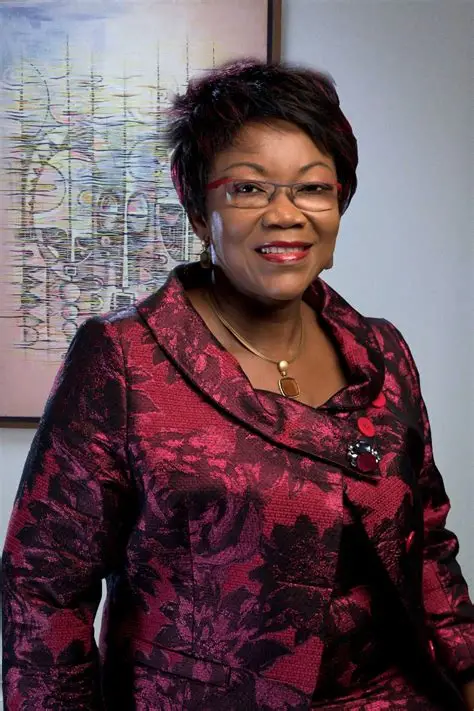
In this interview at the Chartered Institute of Logistics and Transport (CILT) Nigeria 2025 Annual General Meeting and Conference, which held recently in Lagos, President and Chair of Council, Mrs. Mfon Ekong Usoro, sheds light on the Institute’s remarkable transformation journey over the past four years. She discusses CILT Nigeria’s strides in human capital development, international collaborations, digital transformation, financial accountability, and its growing impact within the global logistics and transport ecosystem. Mrs. Usoro also highlights key partnerships, achievements, and her vision for the continued advancement of the logistics and transport profession in Nigeria.
“We have regularised the status of CILT at the Corporate Affairs Commission”
- “We now enjoy speaking slots in flagship sessions at international conferences”
“We radically restructured our conferences — devoting more time to learning and knowledge exchange”
For those who may be new to the Institute, could you please tell us briefly about CILT and its presence in Nigeria?
The Chartered Institute of Logistics and Transport is the world’s leading international professional body for all sectors of the logistics and transport industry. It was founded in 1919 in the United Kingdom and has a presence in over 100 countries. It is headquartered in the United Kingdom. The Nigerian branch of CILT was established in 1958, registered at the Corporate Affairs Commission in 1989, and attained Territorial Status in 2014, with a presence in 13 States of the Federation.
What is the core focus of CILT’s activities in Nigeria?
The core of the Institute’s functions is human capital development through formal professional courses in supply chain, transport, and logistics, applying the curriculum, quality, and standards set by CILT International. Upon the successful completion of studies and examinations, the Institute’s International Secretariat issues certificates to students who have passed the exams. CILT Nigeria serves as a centre that administers the curriculum and supervises examinations on behalf of CILT International. Professional certificates issued by the Chartered Institute of Logistics and Transport are international certifications, valid and recognized globally. In fact, tomorrow at this venue, we will hold a graduation ceremony for students who have earned the International Advanced Diploma in the finest tradition of educational institutions.
Tell us about this year’s conference theme and structure. What makes it special?
The 2025 Conference Planning Committee, chaired by Professor Kayode Oyesiku, FCILT, has designed a rich, intellectually stimulating, carefully chosen set of topics and expert speakers that will engage our minds and contribute to mapping the nation’s policies for the Supply Chain, Logistics and Transport, and the Blue Economy. A prominent industry stakeholder and ship owner, Engr. Greg Ogbeifun, FCILT, will deliver the Keynote Address. The content of his address will augment and hopefully refocus the implementation strategy of policies adopted by the government. We also have industry presentations by experts covering sustainable and resilient transport systems, as well as recent developments in the supply chain across transport modes. Research papers will address topics such as blockchain, climate-resilient supply chains, green shipping corridors in the Niger Delta, integrating renewable energy solutions, regulatory support for digitalisation in cargo loss, and integrating sustainability in marine resources management growth for Lagos, among others.
CILT Nigeria has achieved quite a lot under your leadership. Can you highlight some key partnerships and collaborations established in recent years?
In the past four years, CILT Nigeria has established strategic collaborative arrangements with critical stakeholders in the knowledge industry and deepened existing relationships. We executed a Memorandum of Agreement with the Maritime Academy of Nigeria. Under this model, cadets of the Academy will, upon graduation, hold both the Institute’s professional qualifications and the applicable Certificates from the Maritime Academy and be eligible to become Chartered Members of the Institute immediately they attain the required number of years of industry experience.
We also established a strategic partnership with the Bureau of Public Procurement (BPP), cemented by an MoU. The aim is to embed logistics and supply-chain management principles into Nigeria’s public procurement cycle, from needs assessment to final delivery. Under this partnership, CILT will design specialised training for procurement officers in the public sector. In collaboration with the African Centre for Supply Chain, we introduced Executive Masterclasses targeted exclusively at CEOs and C-Suite occupants. Together with Multimix Academy, we also offer Certified Transport and Distribution Professional Courses.
We have also intensified collaboration with the Nigerian Military through the Nigerian Army College of Logistics and Management (NACOLM), where we provide courses on the “civilian” aspect of logistics and transport. I note with satisfaction the increase in the number of officers who took the CILT courses and were conferred with professional certificates under the immediate past Commandant, Major General Wisdom Etuk, FCILT. We look forward to strengthening this collaboration under Major General Collins Adetoba, the new Commandant.
You had a vision to “Reform and Transform CILT Nigeria.” How far have you come with that agenda?
When we boarded this ship four years ago, our campaign motto was indeed to “Reform and Transform CILT Nigeria.” We established a formidable, inclusive team of visionaries, innovators, and dreamers comprising serving and retired university professors, industry titans, military officers, Next Generation members, and Women in Logistics across all six geopolitical zones of Nigeria. Together, we recorded several “firsts,” broke existing records, and upheld the highest standards of fund management and financial accountability. Membership continues to grow year-on-year. In 2021, we recorded 169 new members. That number jumped to 637 in 2022, 644 in 2023, 519 in 2024, and 624 as of September 2025.
It’s interesting that you mentioned growth in local conferences. What has changed in CILT Nigeria’s approach to events?
We have witnessed a new trend where Nigeria is no longer merely noted as the highest and most colourful delegation at CILT international conferences but is now counted among the most impactful. We now enjoy speaking slots in flagship sessions at international conferences. More importantly, Nigerians now participate in large numbers at our National Annual Conferences, while attendance at foreign conferences has dwindled — because our conferences now compare favourably with international ones in terms of quality, content, and expertise.
How has your administration improved training and education within CILT?
We introduced the Train-the-Trainer programme for Accredited Training Providers, Mandatory Professional Development Programmes (MPDPs), and several sector webinars for members across all transport modes, ensuring unbroken consistency, since our administration began. We also established the CILT Academics in Logistics and Transport (CILT-ACALOT) Forum on May 7, 2023, comprising academics from tertiary institutions specialising in Logistics, Transport, and Supply Chain disciplines. This forum serves as a permanent Faculty for our courses and resource persons at webinars and conferences. You will feel their presence at this conference.
Governance and accountability are critical in professional institutions. How has CILT Nigeria fared under your watch?
On governance and accountability, we regularised the status of CILT, which is registered as a company limited by Guarantee at the Corporate Affairs Commission. We established a Board of Directors, liquidated arrears of penalties for failure to file annual returns for about 35 years, and rescued CILT from being deleted from the registry. We democratised governance by decentralising control and removing the Secretariat and President from membership admissions. That function is now fully vested in the Professional Development Committee (PDC), chaired by Prof. Kayode Oyesiku, FCILT.
We also created a Finance, Budget & Audit Committee, led by Mr. Akeem Ajibola Oduala, FCILT. This committee ensures all expenditures are approved through budgetary processes and physically audits the Secretariat quarterly. The results have been phenomenal. Revenue grew from N7.8 million in December 2021 to N55 million in Q3 2025 — a 242% increase. Our liquid assets also rose from N17 million to N123 million in the same period. Accountability and transparency remain our watchwords.
How about digital transformation — what innovations have been implemented?
We rebuilt the CILT Nigeria website to international standards through our in-house IT expert, Mr. Daniel Olabinjo. We activated our social media handles for real-time engagement and recorded over 9,000 followers on LinkedIn. We also moved to online elections — secure, transparent, and stress-free — where members vote from the comfort of their homes. The last election, led by Mrs. Rakiya Nuhu, was widely applauded. Our payment system has also been digitized for conferences and transactions, and the Council approved a modern Accounting ERP software for transparency.
You mentioned the CILT Book of Proceedings earlier. What is that about?
We radically restructured our conferences — devoting more time to learning and knowledge exchange. Alongside industry sessions, we introduced Research Paper Presentations, coordinated by Prof. Geraldine Okeudo, FCILT, where academics share their groundbreaking studies. We publish these works annually in the CILT Book of Proceedings, and a new edition will be unveiled this morning.
CILT Nigeria’s international visibility seems to have grown. How has that evolved?
The impact of CILT Nigeria within CILT International is evident. Prof. Ogochukwu Ugboma serves on the International Education Standards Committee and the Membership Panel. Alhaji Ibrahim Jibril is the International Vice President for Africa and Chair of the African Forum. The participation of Chief Teete Owusu-Nortey, FCILT, President of CILT International, in our conferences since 2022 attests to the success of our Transformation Agenda.
Finally, what message do you have for stakeholders and government representatives attending this conference?
I wish to draw attention to reports that in many instances where the Government has implemented the Transport Officer Cadre up to Directorship in the public service, positions are often filled by engineers and administrators rather than professionals in logistics and transport. Students studying logistics and supply chain management in our universities must have confidence in employment prospects, especially given the Government’s recognition of the critical role efficient logistics and transport play in the Renewed Hope agenda.