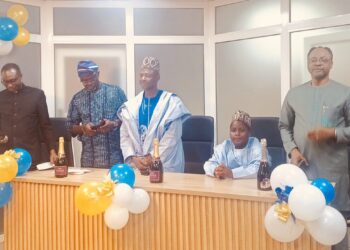
In this incisive interaction with journalists at the recent 2025 MARAN Maritime Annual Lecture (MAMAL) organized by the Maritime Reporters Association of Nigeria (MARAN), a former Director-General of the Nigerian Maritime Administration and Safety Agency; Barrister Temisan Omatseye, laid bare the security, insurance and policy challenges confronting Nigeria’s maritime sector and proposed bold, home-grown solutions. Drawing on his experience with war-risk premiums, vessel tracking, and efforts to set up a local insurance portal, he argued that Nigeria must stop “begging” for protection, take control of its cargoes and maritime services, build corridors, bunkering capacity and local insurance capacity to turn the country from a destination of risk into the next frontier of opportunity.
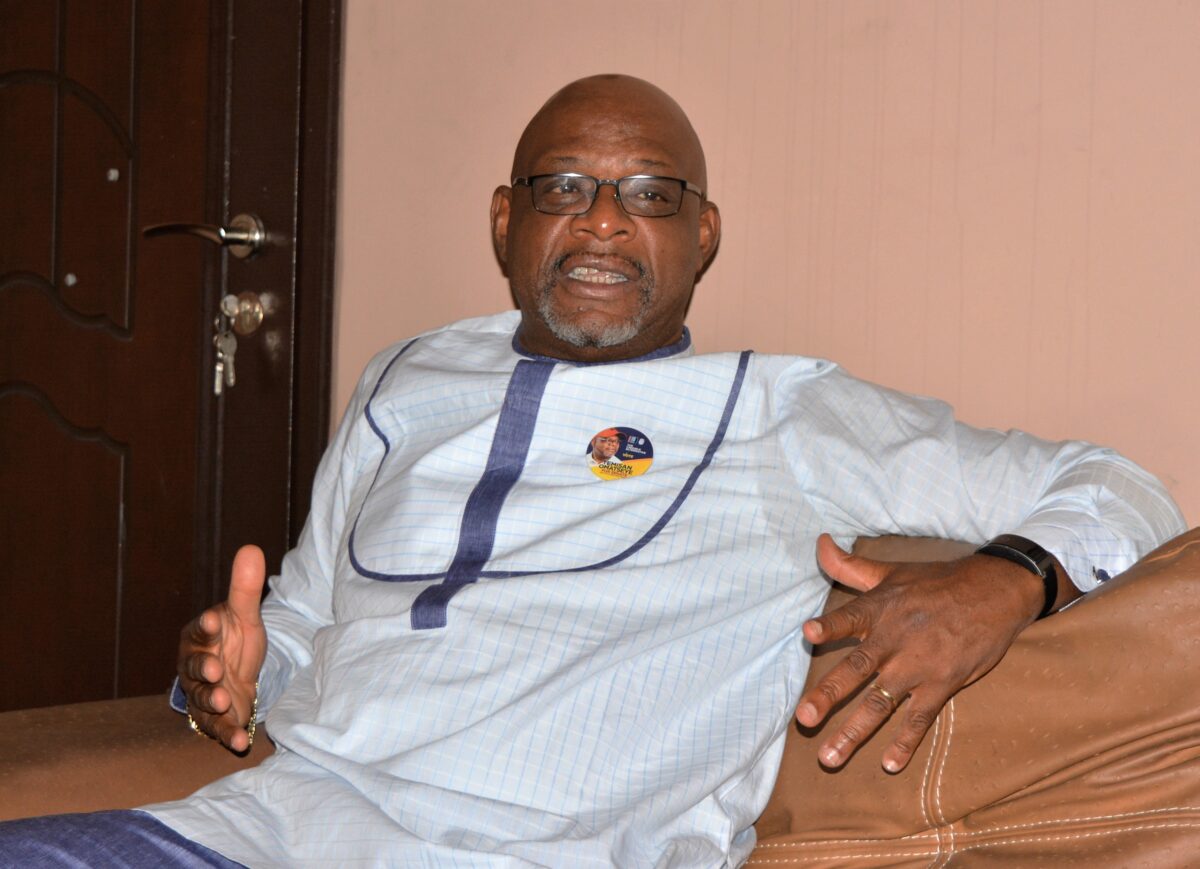
“Bunker operations in Nigeria should be prime because we have the best bunker products”
“It is expensive for vessels to do STS operations in Nigeria”
To start with, can you tell us how you first came to understand war risk insurance and its implications for Nigeria?
At first,when I was the DG of NIMASA, I didn’t know anything about war risk insurance. And they explained to me that the Joint War Risk Committee in London are charging a 0.025% on hull, or whatever the case may be, for every vessel that goes 5 degrees east of the Lagos Harbour. Which means that anything that crosses Lagos slightly, and the moment you enter that area towards the Port Harcourt area, towards Bakassi, there is a fee that is being charged. Interestingly enough, that fee went up to 0.625%. And at that same time, Pakistan, which was under serious attack, was still being charged 0.25%. Now the reason, quite simple, why that was the case, was that we didn’t have an eye on the ball. So they were charging us all those things, without us in the NIMASA really knowing. Because it was just charged.
So I took it upon myself just now to ask the question on Chat GPT. I asked Chat GPT a very simple question. I said, “What is the present rate for war risk premium by the JWC for Nigeria and the Gulf of Guinea?” And you know what Chat GPT said? It said “I wasn’t able to find any publicly available current percentage rates, EGX or whatever, that the JWC imposes specifically for war risk premium in the case of Nigeria and the Gulf of Guinea”. Now, let me just jump down and say this. It now says, “instead, premiums are provided on a case-by-case basis upon reporting a voyage to the insurers. Even Chat GPT does not even know what we are being charged as war risk premium.
During your time as DG, what figures were you working with?
As of 2019, when I was DG, we were paying $400 million a year. Now, that basically corroborates the figure, which I heard the DG of NIMASA mention and I’m worried. Why am I worried? You would ask. If you do not know something that is happening in Nigeria, I should tell you now. Nigeria is a center of attraction for the world. Why? Aliko Dangote has built a refinery which is going to produce 650,000 barrels a day. A gentleman called Samad Bua will very soon commission a refinery which is 200,000 barrels a day. I am very aware that another one is coming up again in the Ogun state which is 500,000 barrels a day. They are modular refineries which are producing purely for export purposes.
I am aware that just a few days ago, NUPRC just approved a terminal for the export of LPFO, NAFTA, and AGO from modular refineries out of Koko. What does that mean? LNG comes on stream next year. Now, can you just imagine what that makes Nigeria? Because we are only consuming 55 million liters of PMS or whatever per day, that makes Nigeria a net exporter of petroleum products. Except they are building airports on the high seas, where they will be carrying these petroleum products out of this country. I believe that the majority of these cargoes will be carried out by sea. Now, that is only one part.
Beyond petroleum, what about dry cargo and minerals?
Yes, talking about dry cargo, there are major investments coming out from the North with our Minister for Solid Minerals, where they are doing industrial mining. Now, the only way those things can leave Nigeria is through water, moving preferably by the inland waterways or by the railway, to possibly what will be built in the future, a solid mineral port down somewhere in Delta, either in the Port Harcourt area or the Delta or Utu or whatever. So, what does that mean? We are taking our eye off the ball as a country called Nigeria. And as more vessels are coming in, the more JWC makes money.
How does the JWC determine its rates in the first place?
Let me tell you how JWC works and this is where MARAN comes to play a major role in how JWC works. Because when we got that information about the War risk, what did we do? We first of all engaged the JWC. And they were not willing to listen to us. They did not care. They just ignored us totally. But how did they work? How did we get from 0.025% to 0.625%? Every time an activity happens in Nigeria, you are depressed, you have to report it. You report it and then the man in JWC sits down there, sees this report, on his way home reads it on social media or whatever, gets home, his wife makes him dinner, and then he reads the news or sees something on TV saying one ship was attacked. He now calls his colleagues and says “hey Mike, you see what happened in Nigeria today? Some vessel got attacked. I think we need to increase the rates in Nigeria”. There is no way they use any analysis. It’s based on them just determining what they want to charge us. That is what we do. We know that.
So what counter-measures did you and your team attempt while at NIMASA?
When we engaged them, and tried to speak to them, and they refused to listen, we took a decision in NIMASA and unfortunately, it was not implemented because it was only my team that were doing it. So apologies, I didn’t tell NIMASA what I was doing. It was not everything you can tell them. We said, well, if JWC is a private sector person, we too would start to sell the insurance policy. So what we did, we said, in NIMASA, we are going to set up a portal, a NIMASA portal. Well, that portal would allow for all shipping companies, and all vessels coming in would pay their NIMASA 3% levy on that portal. But we will sell the insurance in that portal as well for war risk premium, and drop the rates down to next to zero. That is what we said we are going to do. We did set up a portal. But we had a problem. Everything was ready to go because you cannot do it by yourself. It has to be the NIA. So it’s the NIA that takes that role. It’s not a NIMASA role. We are only plotting them in to the portal for them to sell insurance. So, we created that. But there was a problem because, you still need a reinsurer to insure that risk because it’s major. Nobody wants to get their vessel attacked in Nigeria, and when it’s time to pay, you cannot pay. So we got a major reinsurer out of the UK, who agreed to reinsure the risk for war risk premium. Walking away, was the second largest reinsurer in the UK Lloyds in the UK insurance business. But, he said he cannot do it because the earnings the British government gets for war risk premium is so much that if anything happens, the prime minister of Britain will fly that day to Nigeria. But he will only agree to do it if he gets a green light from our President. Because he does not want a situation whereby the prime minister flies in, sees our president, and the president says he is not aware of it and tell them to stop it, then he get blacklisted in his contract. That was where it got bad.
From your perspective, what’s the way forward for Nigeria on this issue?
Look, the economies of UK, Europe, and America are collapsing. The next frontier is Africa, led by Nigeria. I am totally against going to beg anybody for anything. Let’s create competition. We have it now, let’s create our own. Let’s form our own insurance, whatever. Find the people that can do it. I was going to tell you to invite the Nigeria Insurance Association here. Call them here, they will do it. We have the capacity and we have the capability to create our own. I’m not saying they will take us out. Well, first of all, they will crash the premium. When they see it crash so low and it becomes negligible, I think they will pull us out. Let’s create competition. We should not go and beg anybody for anything. And this is where NIMASA comes in especially in administrative enforcement. Why can any how vessel be coming in? Under the ISPS Code, a vessel cannot lift anchor from Nigeria to go to America without the Coast Guard clearing that vessel first. That’s the ISPS scope. You do that, you cross America, they blow you out of the water. If that is part of the requirement of the ISPS code, why can we not also impose that? Because some of these vessels that are coming in, even the Master does not even know they’re in Nigeria. So what then happens is that they now get attacked. So how can I protect a thief in my compound? Of course, we know they are coming to carry stolen crude or whatever they are coming to carry. But the moment they get attacked, they go to wherever and make a lot of noise that they’ve been attacked in Nigeria. But if you don’t tell me you are coming to Nigeria, how can I protect you?
We need to see a situation whereby any vessel coming to Nigeria must declare that they are coming and say how long they will be in Nigeria. And it is then the likes of C4i and Falcone Eye can work better because then they can track that vessel from the moment it leaves anchor to come to Nigeria. Nigeria has become a free for all. And we must stop it. Sierra Leone alone was on war risk premium. But they took them out because their money is peanuts. But Nigeria is where it is today. Like I keep saying, the Ghanaian minister in the UN was boasting that Ghana was the gateway to the Gulf of Guinea and whatever and Jerry Gana stood up and said Nigeria is the destination. And now Nigeria remains the destination.
Have you been tracking vessel positions and how these relate to attacks or operations?
I think last week, Tuesday, I showed the vessel positions. Go and look at what is happening in Lome and compare to what is happening in Lagos, which is the destination. Vessels are sitting out there. Why? Because it is expensive for vessels to do STS operations in Nigeria. A vessel operation in Lome will cost a shipowner $15,000 maximum $20,000. Come to Nigeria. Nigeria costs $60,000. Who wants to come and do that operation? Yes, we agree that the then-Deputy Director, Banking Operations of Central Bank, is the one that put us in this mess. God bless him wherever he is with that simple memo he did, that said no more STS operation of shipments. That is what killed us. That was what happened. He sent one memo. But to be fair, it was Nigerians that were been dubious outside. But now our waters are safe enough to carry out operations.
Despite those problems, do you see opportunities for Nigeria in maritime services like bunkering?
Now, you talk about bunker operations. Look, we have extended our water to 220, which means we are a corridor for all vessels moving now. And therefore, the bunker operations in Nigeria should be prime because we have the best bunker product of 0.5 sulfur content, if not less, in Nigeria. As I speak to you, in most of the modular refineries, all their production are exports. But guess what? No bunker operations happen in Nigeria. All the bunkers are being taken to Lome for trading. And then they will still bring their bunkers and sell it here. Just yesterday, I said in a conference that we do not have a projected plan of where we want to go. We have youths roaming the streets. The NSDP, God bless Ade Dosumu, for he developed that concept, which I ran with and which continued. The NSDP was supposed to be what we are going to use to sow the seed for the development of our maritime sector. But guess what? Many of the guys trade themselves. Because let me tell you, the next set of colonization of Nigeria will come in shipping. If we do not take control of our cargoes, which we are supposed to export, the foreigners will determine where our cargoes will go. Can you imagine if Donald Trump wakes up tomorrow morning and decides that he’s going to place a sanction on Nigeria? What do we do? What saved Iran and Russia? It is because they had their own fleets. That was how they were able to bust the sanctions against them. What do we have? If they put a sanction on Nigeria tomorrow, how will Dangote ship is crude oil? That is the truth.
Returning to the risk premium discussion and practical solutions — what constructive measures did you propose?
We can create corridors on the ocean. What do I mean by corridors? You can create a 50 by 100 nautical mile corridor. And when those vessels are cutting notice to leave anchor, you give them the coordinates of that corridor. And then we have people like the Navy having their security boat, patrolling that corridor. So as soon as they come into that corridor, they become our responsibility. But that corridor takes you straight. So we know that. Because we cannot control 91,000 square kilometers of water. We can’t do that. But we can start small and begin to grow. And then we can have a small fee. Because what happens is that, if you do it by whatever, you can get a small fee, a small security fee. Then we can even have the fishing trawlers become part of it. Because you know what is happening, our trawlers are going to the deep sea, the Chinese are attacking them, and are stealing their catches and beating their crews. That is why our fishing thing is not working. It’s a security issue. That’s what’s going on. We know what is happening out there in the high seas.