shippingposition
  • Home
  • News
  • Editorial
    • Vox Pop
  • Maritime safety
  • Oil and Gas
  • Personality
  • Health
No Result
View All Result
shippingposition

Home » Cameroon Joins Nigeria, Adopts Maritime Security Law to Fight Gulf of Guinea Piracy

Cameroon Joins Nigeria, Adopts Maritime Security Law to Fight Gulf of Guinea Piracy

by Joshua
January 3, 2023
in Featured, News

Almost six months after the UN Security Council adopted a text compelling Gulf of Guinea countries to criminalize piracy and armed robbery at sea, Cameroon has adopted a law on suppression of piracy and general safety of maritime navigation within its waters.
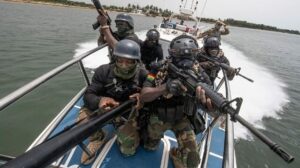
cameroonian-forces

President Paul Biya signed the law on December 27, making Cameroon the second country in the region to enact a national legal framework on suppression of piracy and maritime offenses. Nigeria was the first after it adopted a similar law back in 2019.

The law is a critical milestone in the Gulf of Guinea’s maritime security, with Cameroon’s national maritime authorities empowered to punish any illegal activities threatening safe navigation within its territorial waters.

Notably, the law takes a harsh stance to offenses related to piracy, terrorism onboard ships, pollution of waterways and financing acts of piracy. For all these offenses, the sentence is life imprisonment if a conviction is successful. Fines range from $16,000 to $4 million depending on the crime.

Recall that the Director-General of the Nigerian Maritime Administration and Safety Agency (NIMASA), Dr Bashir Jamoh, had revealed that following the successes recorded by Nigeria in criminalising piracy and sea crimes through the Suppression of Piracy and Other Maritime Offences (SPOMO) Act, other West African countries located along the Gulf of Guinea (GoG) are now using the Act as a model in their Admiralty matters.

Speaking during the 2nd Nigerian Admiralty Law Colloquium which held in March 2022, the NIMASA DG stated that victories in the courts have rippled across Nigerian waters and helped reduce piracy to a 27-year low.

According to Dr Bashir Jamoh, “It is my honour and pleasure to welcome you to the 2nd Edition of the Nigeria Admiralty Law Colloquium hosted by NIMASA in collaboration with the Nigeria Institute of Advanced Legal Studies (NIALS).

Read Also:  TUC Demands N180/Litre Fuel

While Cameroon’s territorial waters have remained relatively safe, a few incidents of piracy recorded since 2019 prompted the government to take action. The primary goal has been to guarantee security of ships at the Doula anchorage, mainly using local armed guards onboard vessels. The legal framework now in place should act as a credible deterrent to pirate gangs.

Most importantly, as Gulf of Guinea piracy evolves into other maritime offenses such as oil theft, countries in the region are encouraged to strengthen their national capacities in maintaining maritime security. Hence, Cameroon’s move to harmonize a national legal framework for prevention of piracy and armed robbery at sea is a step in the right direction.

Indeed, regional frameworks such as Yaoundé Code of Conduct have been instrumental in curbing piracy. However, a shift to national approach is even more effective.

“It is amazing news for Cameroon and the entire region. It will surely come in handy as Economic Community of Central African States (ECCAS) region works to adopt their Supplementary Act for the Transfer of Piracy Suspects,” commented Dr. Ifesinachi Okafor-Yarwood, a maritime security specialist based at University of St. Andrews, Scotland.

shippingposition

Kindly like us on Facebook/twitter


Tags: CameroonNigeria

Related Posts

NSC Pushes Fast-Track Clearance of Power Project Cargo at Ports

NSC Pushes Fast-Track Clearance of Power Project Cargo at Ports

April 17, 2026
Oyetola Commissions NIMASA–UNILAG Institute of Maritime Studies Building, Reaffirms Commitment to Blue Economy Growth

Oyetola Commissions NIMASA–UNILAG Institute of Maritime Studies Building, Reaffirms Commitment to Blue Economy Growth

April 17, 2026
Maritime Sector Faces Priority Alignment Challenges – Centre The Sea Empowerment and Research Centre (SEREC) has raised concern over alleged policy misalignment and weak coordination in Nigeria’s maritime sector. It said the sector was at a critical crossroads, shaped not by limited capacity but by weak prioritisation discipline. SEREC made this known in a policy bulletin and presidential advisory memo made available to newsmen by its Head of Research, Mr Eugene Nweke, on Thursday in Abuja. Nweke said the sector had prioritised projects over systems, announcements over outcomes and revenue over value creation, describing the trend as a national economic risk. “Nigeria’s maritime sector has repeatedly prioritised visibility over viability, expansion over optimisation and announcements over execution. This has resulted to congestion in spite expansion, digitalisation without integration and revenue growth without efficiency gains,” he said. He said policy inconsistency and institutional fatigue had weakened the sector, resulting in reform fatigue and stakeholder distrust. According to him, Nigeria is losing economic momentum and regional relevance, with annual losses estimated at between N2.5 trillion and N4 trillion due to inefficiencies. He said with proper reforms, the sector could generate over one trillion in annual savings, recover between N500 billion and one trillion naira in revenue from cargo retention. The sector, he said, could unlock three billion to six billion dollars in export growth, with gains expected to boost jobs and GDP. Nweke said the sector had suffered from port expansion without adequate evacuation systems, poor connectivity and underperforming inland container depots. Several depots, he said, were licenced based on geographic considerations rather than economic demand, leaving many underutilised. He called for their conversion into export logistics hubs to support agro-export growth, cold-chain systems and structured export aggregation, critical for AfCFTA competitiveness. Nweke also warned against uncoordinated deep seaport development and fragmented digital trade reforms, noting that it could undermine smooth implementation of the National Single Window. He noted that to reposition the maritime sector, focus must shift from revenue obsession to trade efficiency, export competitiveness and cost reduction. According to him, Nigeria’s maritime system remains import-driven, with weak export infrastructure, poor logistics integration and limited export terminals. He said this had led to cargo diversion to neighbouring ports saying, ‘Nigeria is losing cargo not by geography but by inefficiency’. He stressed the need for a strong independent regulator to enforce global standards and curb tariff abuses, describing regulation as key to a functional port economy. Nweke urged proper implementation of the Cargo Tracking Note (CTN), warning it could fail without transparency and coordination. He said maritime reforms must prioritise system integration, measurable outcomes and coordination over fragmentation. “Nigeria is approaching a tipping point. It is either we fix our maritime system or continue to finance the efficiency of neighbouring economies,” he said.

Maritime Sector Faces Priority Alignment Challenges – Centre The Sea Empowerment and Research Centre (SEREC) has raised concern over alleged policy misalignment and weak coordination in Nigeria’s maritime sector. It said the sector was at a critical crossroads, shaped not by limited capacity but by weak prioritisation discipline. SEREC made this known in a policy bulletin and presidential advisory memo made available to newsmen by its Head of Research, Mr Eugene Nweke, on Thursday in Abuja. Nweke said the sector had prioritised projects over systems, announcements over outcomes and revenue over value creation, describing the trend as a national economic risk. “Nigeria’s maritime sector has repeatedly prioritised visibility over viability, expansion over optimisation and announcements over execution. This has resulted to congestion in spite expansion, digitalisation without integration and revenue growth without efficiency gains,” he said. He said policy inconsistency and institutional fatigue had weakened the sector, resulting in reform fatigue and stakeholder distrust. According to him, Nigeria is losing economic momentum and regional relevance, with annual losses estimated at between N2.5 trillion and N4 trillion due to inefficiencies. He said with proper reforms, the sector could generate over one trillion in annual savings, recover between N500 billion and one trillion naira in revenue from cargo retention. The sector, he said, could unlock three billion to six billion dollars in export growth, with gains expected to boost jobs and GDP. Nweke said the sector had suffered from port expansion without adequate evacuation systems, poor connectivity and underperforming inland container depots. Several depots, he said, were licenced based on geographic considerations rather than economic demand, leaving many underutilised. He called for their conversion into export logistics hubs to support agro-export growth, cold-chain systems and structured export aggregation, critical for AfCFTA competitiveness. Nweke also warned against uncoordinated deep seaport development and fragmented digital trade reforms, noting that it could undermine smooth implementation of the National Single Window. He noted that to reposition the maritime sector, focus must shift from revenue obsession to trade efficiency, export competitiveness and cost reduction. According to him, Nigeria’s maritime system remains import-driven, with weak export infrastructure, poor logistics integration and limited export terminals. He said this had led to cargo diversion to neighbouring ports saying, ‘Nigeria is losing cargo not by geography but by inefficiency’. He stressed the need for a strong independent regulator to enforce global standards and curb tariff abuses, describing regulation as key to a functional port economy. Nweke urged proper implementation of the Cargo Tracking Note (CTN), warning it could fail without transparency and coordination. He said maritime reforms must prioritise system integration, measurable outcomes and coordination over fragmentation. “Nigeria is approaching a tipping point. It is either we fix our maritime system or continue to finance the efficiency of neighbouring economies,” he said.

April 17, 2026
Reforms Drive Maritime Turnaround, Position Nigeria for Blue Economy Leadership — Dantsoho

Reforms Drive Maritime Turnaround, Position Nigeria for Blue Economy Leadership — Dantsoho

April 16, 2026

Latest News

NSC Pushes Fast-Track Clearance of Power Project Cargo at Ports

NSC Pushes Fast-Track Clearance of Power Project Cargo at Ports

April 17, 2026

Oyetola Commissions NIMASA–UNILAG Institute of Maritime Studies Building, Reaffirms Commitment to Blue Economy Growth

Maritime Sector Faces Priority Alignment Challenges – Centre The Sea Empowerment and Research Centre (SEREC) has raised concern over alleged policy misalignment and weak coordination in Nigeria’s maritime sector. It said the sector was at a critical crossroads, shaped not by limited capacity but by weak prioritisation discipline. SEREC made this known in a policy bulletin and presidential advisory memo made available to newsmen by its Head of Research, Mr Eugene Nweke, on Thursday in Abuja. Nweke said the sector had prioritised projects over systems, announcements over outcomes and revenue over value creation, describing the trend as a national economic risk. “Nigeria’s maritime sector has repeatedly prioritised visibility over viability, expansion over optimisation and announcements over execution. This has resulted to congestion in spite expansion, digitalisation without integration and revenue growth without efficiency gains,” he said. He said policy inconsistency and institutional fatigue had weakened the sector, resulting in reform fatigue and stakeholder distrust. According to him, Nigeria is losing economic momentum and regional relevance, with annual losses estimated at between N2.5 trillion and N4 trillion due to inefficiencies. He said with proper reforms, the sector could generate over one trillion in annual savings, recover between N500 billion and one trillion naira in revenue from cargo retention. The sector, he said, could unlock three billion to six billion dollars in export growth, with gains expected to boost jobs and GDP. Nweke said the sector had suffered from port expansion without adequate evacuation systems, poor connectivity and underperforming inland container depots. Several depots, he said, were licenced based on geographic considerations rather than economic demand, leaving many underutilised. He called for their conversion into export logistics hubs to support agro-export growth, cold-chain systems and structured export aggregation, critical for AfCFTA competitiveness. Nweke also warned against uncoordinated deep seaport development and fragmented digital trade reforms, noting that it could undermine smooth implementation of the National Single Window. He noted that to reposition the maritime sector, focus must shift from revenue obsession to trade efficiency, export competitiveness and cost reduction. According to him, Nigeria’s maritime system remains import-driven, with weak export infrastructure, poor logistics integration and limited export terminals. He said this had led to cargo diversion to neighbouring ports saying, ‘Nigeria is losing cargo not by geography but by inefficiency’. He stressed the need for a strong independent regulator to enforce global standards and curb tariff abuses, describing regulation as key to a functional port economy. Nweke urged proper implementation of the Cargo Tracking Note (CTN), warning it could fail without transparency and coordination. He said maritime reforms must prioritise system integration, measurable outcomes and coordination over fragmentation. “Nigeria is approaching a tipping point. It is either we fix our maritime system or continue to finance the efficiency of neighbouring economies,” he said.

Vessels Expected At Lagos Ports As At 17th April, 2026

Reforms Drive Maritime Turnaround, Position Nigeria for Blue Economy Leadership — Dantsoho

Tariff Hike: Freight Forwarders Demand Policy Review, Stronger Local Content Protection

Customs Boss Pledges Multimedia Centre, Radio Station For NIJ

MWUN, Maritime Unions Threaten Action Against Temile Over Workers’ Unionisation Dispute

NCS Seizes Smuggled Donkey Skin, PMS Worth N98.3 Million In Adamawa

Vessels Expected At Lagos Ports As At 16th April, 2026

NIJ Honours Customs CG Adeniyi with Fellowship, Announces Landmark Multimedia Centre Donation

NIMASA DG Commends NSDP Graduates As 34 Beneficiaries Obtain CoC

kindly like our Facebook page

Health

Sleep Deprivation Root Cause Of Many Disease – Says Physician
Health

Health Benefits Of Consuming Garden Egg

March 23, 2026

A great source of dietary fibre, minerals and vitamins, garden eggs are a welcomed addition to every meal. This fruit...

Sleep Deprivation Root Cause Of Many Disease – Says Physician

Sleep Deprivation Root Cause Of Many Disease – Says Physician

March 23, 2026
Report Finds Hypertension Affects Up To 40% Of Nigerian Adults In 2025

Stress Management: Psychiatrist Identifies Effective Coping Mechanisms

March 16, 2026
Report Finds Hypertension Affects Up To 40% Of Nigerian Adults In 2025

Report Finds Hypertension Affects Up To 40% Of Nigerian Adults In 2025

March 16, 2026
Lemons Are Among Fruits That Have The Highest Healing Powers Of Diseases On Earth

Lemons Are Among Fruits That Have The Highest Healing Powers Of Diseases On Earth

March 9, 2026
Nigeria Reports Higher Lassa Fever Death Rate

Nigeria Reports Higher Lassa Fever Death Rate

March 9, 2026
The Big Question: Can Diabetes Be Reversed?

Some Early Warning Signs of Diabetes That You Don’t Know, But Should

March 2, 2026
Why Your Favourite Seasoning Cubes May Be Hurting Your Kidneys

Why Your Favourite Seasoning Cubes May Be Hurting Your Kidneys

February 23, 2026
SHOCKING: FIIRO Links High Rates of Organ Failure, Cardiovascular Diseases in Nigeria to Local Grinding Machines

SHOCKING: FIIRO Links High Rates of Organ Failure, Cardiovascular Diseases in Nigeria to Local Grinding Machines

February 23, 2026
MONDAY INTERVIEW: Oyebamiji Did Not See The Media As Adversaries, But As Partners In Development”—Minister Oyetola

DANGER: 11% Of Nigerians Have Kidney Disease – Experts

February 16, 2026

© 2021 Shippingposition

Navigate Site

  • Home
  • About Us
  • Contact us
  • Privacy Policy
  • Editorial Policy
  • Sitemap
  • Terms

Follow Us

No Result
View All Result
  • News
  • Coast To Coast
  • Oil and Gas
  • Maritime Education
  • The Terminals
  • Maritime safety

© 2021 Shippingposition