By Oluyinka Onigbinde
Hope of removal of the contentious payment of War Risk Insurance premium by Nigerian importers has been dampened by the Director General of the Nigerian Maritime Administration and Safety Agency (NIMASA), Dr. Bashir Jamoh.
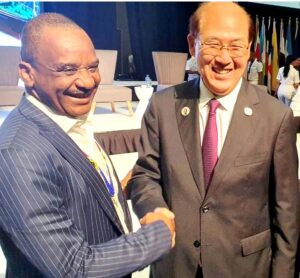
Citing fresh obstacles by the International Maritime Organisation (IMO), the NIMASA DG has foreclosed removal of the premium until some conditions were met.
War risk insurance is a type of insurance that covers damage due to acts of war, including invasion, insurrection, rebellion and hijacking. It has two components: war risk liability, which covers people and items inside the craft and is calculated based on the indemnity amount, and war risk hull, which covers the craft itself and is calculated based on the value of the craft. The premium varies based on the expected stability of the countries to which the vessel will travel.
A respected body; Oceans Beyond Piracy’s 2020 report shows that the total cost of additional war risk area premiums incurred by Nigeria-bound ships transiting the Gulf of Guinea was $55 million in 2020, while 35 per cent of ships transiting the area also carried additional kidnap and ransom insurance totalling $100 million.
In a recant of the assurances he gave in July, the NIMASA DG disclosed in Abuja last week at the three-day national transport summit of the Chartered Institute of Transport Administration of Nigeria (CIOTA), that the 2022 date was no longer feasible and that all entreaties for the premium’s removal have been rebuffed by concerned global bodies.
Represented by Mr Chudi Offodile, NIMASA’s Executive Director, Finance and Administration, the NIMASA DG declared that even the International Maritime Organisation (IMO) has hinged the removal on sustained reduction or total eradication of attacks on ships coming to Nigeria.
According to him, NIMASA has made moves to ensure international ships coming to Nigeria remove the war risk insurance on Nigeria-bound cargo, but the International Maritime Organization has insisted that the success in reducing piracy must be sustained for that to happen.
Shipping Position Daily recalls that, the Director General of the Nigerian Maritime Administration and Safety Agency had in July confirmed that Nigeria had been de-listed from the ‘red list’ of countries affected by piracy, and may no longer pay World Risk Insurance by the end of September 2022.
He had given the hint while speaking at the16th Maritime Seminar for Judges, which was held in Abuja Jamoh, where he had disclosed that, between January and June 2022, no incident of piracy in Nigeria has been reported by the International Maritime Bureau (IMB); implying that Nigeria is now free from piracy.
“Last month (June), after we were removed from the red list of piracy, we were no longer the most dangerous waters to trade on in the whole world as it used to be”, he had told participants at the judges’ seminar in July.
Giving further insight, Jamoh said at the seminar: They claimed we have been on the list for more than 25 years and a short time cannot be a yardstick to remove the War Risk Insurance, adding that we shouldn’t bring a few examples. We compiled our report and they told us last month that they have concluded their Executive Council meeting for the second quarter and by the third quarter in September, they are going to consider other countries. They asked us to bring up our Short, Medium and Long term plans that will convince them that we have permanent and sustainable reasons to maintain the yardstick of the drop in piracy, so they can then remove the War Risk Insurance”.
Speaking further, he added: “That is why I said hopefully by the end of September (2022), we should be able to rejoice and Nigeria can see a drastic reduction in terms of the freight rates we are paying. Since Nigeria is an import-dependent country, it is going to affect everything we’re buying and I hope that the importers will reciprocate the gesture by reducing the cost element of the items we are consuming, because of the reduction in the world risk insurance”.
Apparently still worried that despite the promises, war risk premium is still being paid by Nigeria, stakeholders who took turns to speak last week at the opening ceremony of the National Transport Summit of the Chartered Institute of Transport Administration of Nigeria, blamed insecurity on the nation’s waters as the main reason Nigeria-bound cargoes are forced to still pay the war risk insurance premium, thereby increasing the cost of doing business at Nigerian ports.
The stakeholders noted that despite the presence of the deep blue asset, Nigeria needs to sustainably invest in securing her waterways for the safety of ships coming to the ports.
Speaking during a panel session with the theme, ‘Maritime Safety and Security Administration in Nigeria,’ Emmanuel Jime, the Executive Secretary of the Nigerian Shippers’ Council (NSC), confirmed that shippers still pay high freight on goods coming to Nigerian ports.
He said cargoes that are supposed to go to the Eastern ports in the Calabar and Port Harcourt are being diverted to Lagos ports due to the high rate of insecurity in the Niger Delta waters.
Jime, who was represented by Chief Cajetan Agu, a director at the Nigerian Shippers Council, said there is a high freight differential between the Lagos Ports and Eastern ports due to the payment of war risk insurance charges on cargoes.
He said that shippers pay between $1,000 and $1,500 as freight on Eastern port-bound cargo when compared to the freight for Lagos port-bound cargo.
He said, “Insecurity impacts negatively on the cost of doing business at our ports and the cost is being transferred to the consumers of goods and services. Even ships coming to Lagos Ports used to pay about $2,500 at the Lagos secure anchorage zone, which was terminated by the government at the introduction of the Deep Blue Project of the NIMASA,” Jime said.
On his part, Professor Innocent Ogwude, the Deputy Vice Chancellor of the Maritime University of Nigeria, Okerenkoko in Delta State, said that achieving safety in Nigerian inland waters is about risk reduction.
He said if the waterway is free, goods and services will move freely and the cost would be reduced.
He added that Nigeria needs to spend money to deploy technology to track security threats on the waters because spending to build security on waterways shows how the country values human lives.
Read Also: Why SON’s Return To Seaport Will Increase Sharp Practices, Jeopardize Single Window Plan – Stakeholders
But, responding, the Director General of the Nigerian Maritime Administration and Safety Agency (NIMASA), Dr. Bashir Jamoh said the essence of the NIMASA’s investment in the Deep Blue Project was to improve security in Nigeria’s waters and to reduce the payment of war risk insurance by ships coming to Nigerian Ports.
He said NIMASA has invested over $200 million in acquiring assets for the implementation of the Deep Blue Project.
Jamoh, who was represented by Chudi Offodile, Executive Director, Finance and Administration, listed the assets acquired by NIMASA to include vessels, unmanned aerial vehicles, helicopters, satellite systems, armoured vehicles and the training of over 600 military personnel to operate the Deep Blue Project.
“The NIMASA investment in the Deep Blue Project has become cost-effective for Nigeria and is yielding positive results”, Jamoh said.
The NIMASA boss said the agency is focused on ensuring that the successes recorded in the implementation of the Deep Blue Project are sustainable.
shippingposition
Kindly like us on Facebook/twitter