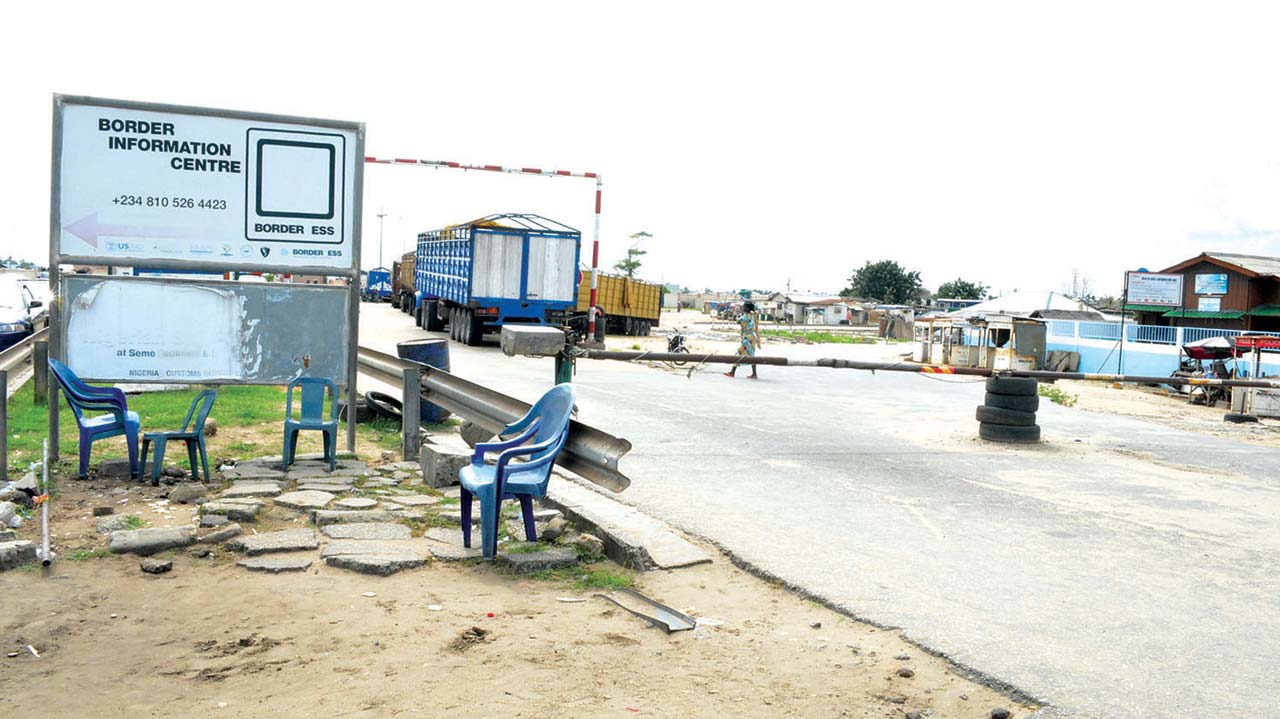
The Seme–Mile 2 international corridor has long stood as one of Nigeria’s most strategic and economically significant trade routes, serving as a vital gateway between Nigeria and the Republic of Benin, and by extension, countries along that corridor of the West African sub-region.
Stretching from the bustling Mile 2 interchange in Lagos through Agbara, Badagry, and terminating at the Seme border post, this corridor is more than just a road, it is a lifeline for commerce, regional integration, and socio-economic exchange within the ECOWAS framework.
For decades, the corridor has been a melting pot of human and vehicular movement. It has carried everything from heavy-duty trucks transporting manufactured goods and petroleum products, to small traders, commuters, and tourists journeying between Lagos and Cotonou, Lome and on to Accra in Ghana.
The ECOWAS Protocol on the Free Movement of Persons, Goods, and Services, established in 1979, envisioned this route as a model of border cooperation, promoting free trade and cross-border integration. In theory, it was meant to be a seamless trade artery connecting Nigeria to its neighbours, facilitating economic interdependence and cultural exchange within West Africa.
However, in practice, the Seme–Mile 2 corridor has evolved into one of the most problematic routes in the sub-region. Over the years, it has become synonymous with gridlocks, poor infrastructure, harassment, and extortion. While successive governments have pledged reforms, the corridor has been plagued by the proliferation of multiple checkpoints, a maze of stops mounted by security agencies and, at times, non-state actors. These checkpoints, which are often spaced less than a kilometer apart, have become a persistent source of frustration for road users.
Truck drivers and travelers routinely complain of being stopped and searched repeatedly by officials of the Nigeria Customs Service (NCS), the Nigeria Police Force, the Nigeria Immigration Service, the Nigerian Army, the Federal Road Safety Corps (FRSC), and occasionally the Nigeria Drug Law Enforcement Agency (NDLEA). In theory, many of these agencies are deployed for legitimate border control, anti-smuggling, and national security duties. But in reality, the sheer number of checkpoints has turned the corridor into a toll zone of illegal collections, where officials often prioritize personal gain over national interest.
The situation has worsened over time, despite numerous policy pronouncements. In the early 2000s, attempts were made to streamline security operations and dismantle redundant checkpoints to align with ECOWAS free trade principles. Yet, by the mid-2010s, reports began surfacing of not just multiple official checkpoints, but also unofficial toll points allegedly controlled by local power brokers, including community heads and traditional rulers who viewed the route as a personal revenue stream and a source of ‘resource control’.
Even the Seme Border, once celebrated as one of the busiest land borders in West Africa, has not been spared the controversies. The road leading to it from Mile 2 has often been described as a “corridor of corruption,” where commercial vehicle drivers, truck owners, and international traders face routine extortion and delays. Despite the Nigerian government’s investments in border modernization and the creation of joint border posts with the Republic of Benin to promote seamless Customs operations, these efforts have yielded limited success on the Nigerian stretch of the route.
The persistence of these challenges reflects not only weak institutional coordination, but also the absence of sustained political will. Each agency claims to be performing its statutory duties, yet collectively, they contribute to a dysfunctional system that hurts Nigeria’s image, discourages investment, and undermines the principles of trade facilitation and regional cooperation that ECOWAS was built upon.
Today, while the Seme–Mile 2 corridor continues to serve as Nigeria’s main westward trade link, it also stands as a symbol of systemic inefficiency and governance failure. For a nation aspiring to lead West Africa in economic diplomacy and regional trade, the continued presence of multiple checkpoints along this crucial international route is an embarrassment and a call for urgent, coordinated reform.
The Lagos–Badagry–Seme corridor remains a vivid symbol of Nigeria’s struggle with regulation and reform. Despite the countless government pronouncements and promises to sanitize this ECOWAS corridor of Mile 2 to Seme, of illegal and embarrassing checkpoints, the road remains a web of trade obstacles manned by multiple government security agencies and, alarmingly, non-state actors. This continued defiance of federal directives undermines Nigeria’s commitment to regional integration, economic growth, and the principles of the Economic Community of West African States (ECOWAS).
At the heart of the issue lies the blatant disregard for the ECOWAS Protocol on Free Movement of Persons, Goods and Services. The corridor, intended to serve as a seamless trade link connecting Nigeria with its West African neighbours, has instead become a gauntlet of extortion and harassment. Trucks, passengers, and traders—many of whom are merely transiting through Nigeria—are subjected to multiple checks that neither add security value nor promote trade facilitation. The situation “negates free trade, violates ECOWAS principles, and paints a bad image of Nigeria,” as many industry stakeholders have lamented.
The Seme Area Command of the Nigeria Customs Service has repeatedly stated that there are only two officially-approved checkpoints—at Agbara and Gbaji. The current Customs Area Controller, Comptroller Adewale Adenuga, has stressed that all other stops are unauthorized. Yet, multiple visits and first-hand accounts from road users tell a different story. Several unapproved checkpoints still exist under the guise of “patrols” or “monitoring units.” These supposed reinforcements have become convenient loopholes for officers who circumvent official orders and use their positions for personal gain.
While receiving a delegation of Nigerian Union of Journalist recently, Adenuga described the numerous checkpoints as a major obstacle to seamless trade, warning that the situation could discourage genuine business transactions within the region.
“I want to categorically state that we have far too many checkpoints operated by various security agencies along the Badagry axis. “Most of these checkpoints should not exist in the first place”, he had lamented.
Even more troubling is the proliferation of Police checkpoints along the same route. Operating under various departmental or special units, these stops have multiplied unchecked, contributing to congestion, delays, and an atmosphere of intimidation. Each agency appears to be operating in isolation, without accountability or coordination, a situation that underscores the urgent need for high-level inter-ministerial collaboration.
Indeed, resolving this challenge requires a concerted effort among key ministries, especially Police Affairs, Interior, Finance, Agriculture, and Defence. The multiplicity of agencies with overlapping mandates on the corridor creates confusion and inefficiency. Without a unified policy direction and enforcement mechanism, each ministry and agency acts independently, often in pursuit of self-interest rather than national interest.
Beyond official agencies, the corridor has also been infiltrated by non-state actors who exploit the disorder to their advantage. Reports dating back to around 2013–2015 revealed how traditional rulers and local community heads allegedly mounted their own “checkpoints” to collect tolls from traders and transporters—effectively treating the road as their private revenue source. The persistence of such practices, even today, illustrates the depth of the governance failure.
The consequences are profound. Nigeria loses significant revenue through leakages and extortion. Importers and shippers incur higher costs, which in turn raises the prices of goods and undermines competitiveness. More importantly, the nation’s reputation within the ECOWAS community suffers greatly. At a time when other West African nations are striving to attract trade and investment through efficiency and transparency, Nigeria’s busiest trade gateway remains a corridor of chaos.
No country leaves its borders open to abuse, but regulation must never become a weapon of exploitation. The government must therefore act decisively, dismantling illegal checkpoints, enforcing the official two-checkpoint policy, and holding agencies accountable for insubordination. Patrol units must be monitored and reined in to prevent them from masquerading as enforcement officers while perpetuating corruption.
Ultimately, the ECOWAS corridor should symbolize Nigeria’s leadership in West African trade, not its dysfunction. Restoring order on the Mile 2 to Seme route is not just a matter of policy compliance; it is a test of Nigeria’s commitment to transparency, regional cooperation, and good governance. The time to act is now, before this critical artery of commerce becomes a permanent emblem of neglect and lost opportunity.