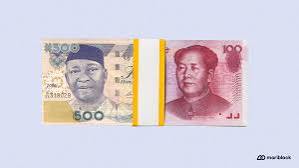
The Nigeria, China currency-swap framework was first established in May 2018, when the Central Bank of Nigeria and the People’s Bank of China signed a deal valued at renminbi (RMB) 16 billion (about $2.5bn).
The currency deal involves providing naira liquidity to Chinese businesses and yuan liquidity to Nigerian businesses, in order to reduce both parties’ dependence on the United States dollar for transactions.
For Nigeria, this deal means that it can use Chinese Yuan to buy goods from China without having to source for the United States dollars. This could help stabilize Nigeria’s economy in several significant ways. On paper, it sounded very good and worthwhile, because trading in Yuan will actually save Nigeria money on exchange fees and streamline the importing processes.
The narrative of trading in Yuan is beneficial because China is Nigeria’s biggest trading partner ahead of the US. The global economic giant imports Nigeria’s crude oil, petroleum gas, and lead ore, among other products
Nigeria on the other hand, imports numerous manufactured goods from China, especially vehicles and electronics. China is arguably Nigeria’s biggest development partner in the world with some landmark infrastructure in Nigeria credited to partnerships with and funding from China. The partnership between both countries is focused on renewable energy, smart city development, and critical infrastructure projects.
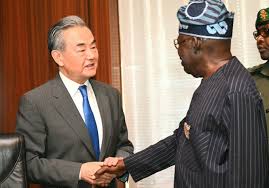
Corroborating the above, Vice President Kashim Shettima had also confirmed that the volume of trade between Nigeria and China, actually peaked at $22.6 billion in 2023.
Most recent data from the National Bureau of Statistics (NBS) shows that even though China is Nigeria’s largest trading partner, yet dollar-denominated transactions continue to soar, highlighting Nigeria’s persistent reliance on the dollar despite the Naira-Yuan swap arrangement.
According to the NBS Foreign Trade in Goods Statistics report for the first quarter of 2025, China maintained its position as Nigeria’s largest import partner, with imports valued at ₦15.43 trillion, accounting for 42.82 percent of Nigeria’s total trade in goods. Meanwhile, Nigeria’s exports to China remain relatively low, contributing to a trade surplus of ₦5.17 trillion for the quarter.
Further international trade data show that in May 2025 alone, China exported goods worth approximately $2.24 billion to Nigeria, a 50.9 percent increase from the previous year, while Nigeria’s exports to China were significantly lower at about $252 million, reflecting a continued trade imbalance that favours China.
Findings have confirmed that, limited liquidity of the Naira and Yuan for trade purposes, infrastructural constraints, and the dollar’s universal acceptance, continue to favour the use of the American dollar. The dollar remains the preferred currency for high-value transactions, import financing, and international trade invoicing, even in sectors dominated by Chinese manufactured goods.
The Naira-Yuan currency swap deal, introduced to encourage direct trade settlements between Nigeria and China, is yet to significantly displace the dollar’s dominance. The official Nigerian foreign exchange market still sees the dollar trading around ₦1,550 to ₦1,600, with only marginal strengthening of the Naira, since the inception of the swap deal.
If Nigeria had thought well about the idea of comparative advantage, Nigeria would have focused more on producing goods that it excels at, while importing items that China can produce more cheaply. For instance, Nigeria has an edge in agriculture thanks to its rich soil and climate, while China is a powerhouse in manufacturing electronics. By trading with China, Nigeria can specialize in its strengths and import goods that would cost more to produce at home, leading to better resource use and job creation.
Ordinarily, the deal with China ought to have been a great relieve and reduced burden on Nigeria’s foreign reserve, but this is hardly true. Forex scarcity is usually a challenge for cross-border transactions in Nigeria, until last year, when the Central Bank of Nigeria allowed the local currency to trade more freely against the dollar.
Had the Naira-Yuan swap deal fully-meterialised, there would have been a lesser dollar burden on trade between Nigeria and China. This is because, the deal between China and Nigeria would have reduced the local demand for dollars in Nigeria. Sadly, this is not the case.
It is obvious that the Naira-Yuan swap deal is simply not working. Otherwise, the tumbling value of Naira would have been reversed. Considering the fact that a large percentage of Nigeria’s imports come from China, the unfavourable exchange between Naira and Dollar would have been addressed to the advantage of Nigeria. On the surface, it is like Nigeria has dumped the swap deal, even though it still exists.
In embracing the deal with China, Nigeria was probably oblivious or underrated the expected reaction from her Western nations trading partners, who have enjoyed the advantage of a dollar-denominated exchange for ages, and who were skeptical of the success of the initiative.
Apart from the poor education of the business community about the benefits of the Yuan-Naira exchange potential, there is also the booby trap of yet a possibility of Nigeria becoming a debtor-nation to China on account of the ‘better deal’ that Yuan offers.
To think that the China –Nigeria deal will erode the pre-eminence of US dollar in global trade may be just wishful. Yes, while the Naira-Yuan swap deal is a strategic step towards reducing dollar reliance, the dollar’s deep-rooted role in global trade, particularly in Nigeria-China transactions, will take time to erode. In addition to goods trade, services such as remittances, insurance, and travel-related payments between Nigeria and China continue to be dollar-denominated, further reinforcing the dollar’s dominance.
Nigeria has a deep political and economic relationship with the USA. This relationship is at risk following the currency swap romance with China. This is given the fact that the United States is a major rival of China and another big trading partner of Nigeria.
Even though touted as having started fully, beneficiaries are complaining about the challenges of taking advantage of the currency swap deal. Giving credence to this, the Abuja Chamber of Commerce recently confirmed that the deal remains significantly underutilised, currently accounting for less than 10 per cent of annual bilateral trade.
The chamber consequently urged the Nigerian and Chinese governments to revisit the agreement’s operational framework to expand its scope, enhance its efficiency, and ensure better access to the facility for Nigerian businesses.
This is where the problem is: From Abuja to Lagos, Kano, Port Harcourt, and other places, the organized private sector have being expressing the same fear; they lament the failure of an otherwise well-intentioned policy.
There are also allegations of Nigerian entrepreneurs losing substantial amount of money while trying to transfer legitimate business funds to China, due to informal and risky currency exchange mechanisms. Some have allegedly become victims of outright fraud. This claims undermine trust, trade integrity, and the sustainability of our commercial relationship with China.
Finally, to make good use of the currency swap deal and make it work, we agree with those who have called on both Nigeria and China to scale up the value and duration of the swap, digitise the exchange process, and empower commercial banks to facilitate direct Naira–Yuan transactions.
By doing these, we believe also that it will reduce Nigeria’s dependence on the US dollar and make trade between Nigeria and China faster, safer, and more predictable for our businesses owners
The nation is yet to see the promises given by the Central Bank of Nigeria that the Nigeria-China currency swap agreement would be a game-changer for the nation’s maritime sector, even as the projection that it will reduce shipping costs, ease foreign exchange pressure, and enhance trade efficiency between both countries remains a mirage.