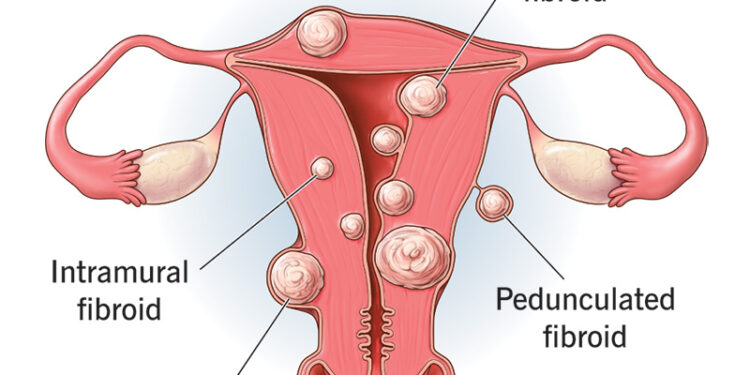

Fibroids are muscular tumors that grow in the wall of the uterus (womb). Fibroids are almost always benign (not cancerous). Not all women with fibroids have symptoms. Women who do have symptoms often find fibroids hard to live with. Some have pain and heavy menstrual bleeding.
Uterine fibroids are growths in your uterus. They’re usually not dangerous, but they can cause pain, heavy bleeding, and problems with fertility or pregnancy. There are different types of treatment and medicines that can help manage your uterine fibroid symptoms.
What are uterine fibroids?
They can be smaller than a pea or bigger than a grapefruit, and you can have many fibroids or just one. Uterine fibroids can grow slowly over many years, or they can grow quickly.
Uterine fibroids are almost never cancerous, and they don’t increase your risk for getting other types of cancer. But they can cause pelvic pain, heavy period bleeding, bleeding between periods, back pain, and in some cases, infertility or miscarriages. However, many people with fibroids don’t have any symptoms at all.
Who’s at risk for uterine fibroids?
Uterine fibroids are pretty common. They can happen at any age, but you’re more likely to get them as you get older. They’re most common for people ages 30-40. Fibroids usually shrink after menopause.
You have a higher chance of getting uterine fibroids if you:
· Have family members with fibroids (especially your mother)
· Are obese
· Eat lots of red meat
· Don’t get enough vitamin D
Research shows that Black women are more likely to get fibroids. Research also shows that fibroids usually develop at a younger age, grow faster and bigger, and cause more severe symptoms for Black women.
What causes uterine fibroids to grow?
No one really knows what causes uterine fibroids. Genetics, hormones, diet, and stress — or a combination of things — may play a part.
It’s likely that fibroids are controlled by hormones, like estrogen and progesterone. They grow when hormone levels are high (like during pregnancy), and stop growing or shrink when people use anti-hormone medication or go through menopause.
What are uterine fibroids symptoms?
Uterine fibroids don’t always cause symptoms. If you do have symptoms of uterine fibroids, they can include:
· Longer or heavier periods
· Bleeding between periods
· Painful cramps
· Anemia (from losing too much blood during your period)
· Pain in your belly or lower back
· Pain during sex
· Feeling full in the lower part of your belly (called pelvic pressure)
· Swelling in your uterus or belly
· Peeing a lot or having a hard time peeing
· Constipation or pain while pooping
· Miscarriage
· Problems during labor, like being more likely to have a cesarean section
· Infertility (this is rare and can often be treated)
The size of your fibroids isn’t related to how bad your symptoms are. Even small fibroids can cause problems.
How do I find out if I have uterine fibroids?
Most people with fibroids don’t know they have them unless they have symptoms.
Your nurse or doctor might find fibroids during a normal pelvic exam. They’ll check your uterus by putting two gloved fingers in your vagina and pressing down lightly on your belly. They might be able to feel the fibroid, or that your uterus feels larger than usual or differently shaped.
Your doctor can also do other types of tests to see if you have fibroids. They may use ultrasounds, X-rays, MRIs, CAT scans, or other types of imaging technology to take a picture of the inside of your body.
You might need a minor surgical procedure to find fibroids, called hysteroscopy or laparoscopy. The doctor inserts a small camera into your body through your vagina or a small cut in or near your belly button to look at your uterus and other organs.
What uterine fibroids treatments are available?
Your uterine fibroids treatments will depend on:
· Your age
· Your general health
· How bad your symptoms are
· The size, type, and location of your fibroids
· Whether you want to get pregnant in the future
You might not need treatment for fibroids if they’re not causing any symptoms or problems for you. Your doctor might suggest medicine to manage your fibroids and their symptoms. You can take ibuprofen (Advil), naproxen (Aleve), or acetaminophen (Tylenol) for pain. Hormonal birth control, like the pill, the shot, or the IUD, can help with cramps and heavy bleeding (but they won’t shrink or cure your fibroids).
There are certain other medicines that can shrink fibroids, stop them from growing, and help manage your symptoms. But some of these medicines can have many side effects, so you usually only use them for a short period of time. Once you stop taking them, the fibroids often grow back quickly. These medicines are sometimes used to shrink fibroids before surgery.
If your fibroid symptoms are really bad, surgery may be the best treatment. There are a few different types:
· Myomectomy: this surgery removes fibroids but leaves the healthy parts of your uterus. It doesn’t affect fertility, so it’s a good option if you want to be able to have children in the future. Depending on the size and location of your fibroids, it may be major surgery, or your doctor may be able to make a small cut in your belly button (laparoscopy) or go in through your vagina (hysteroscopy). After a myomectomy, it’s still possible for new fibroids to grow and cause symptoms.
· Endometrial ablation: this procedure uses laser, electric currents, freezing, or other methods to destroy the lining of your uterus. It treats small fibroids inside your uterus, and helps control heavy bleeding. It’s usually a minor, outpatient surgery. Most people can’t get pregnant after this procedure. If you do get pregnant, you’re more likely to have a miscarriage or other problems during pregnancy.
· Uterine Fibroid Embolization (UFE), also called Uterine Artery Embolization (UAE): this procedure blocks blood flow to your fibroids, causing them to shrink. The doctor makes a tiny cut in your crotch area, puts a thin tube into the blood vessels that go to the fibroid, then injects tiny pieces of plastic or gel into the blood vessel to block the blood supply. Uterine Fibroid Embolization may be a good option for people who have fibroids that cause heavy bleeding, or pain or discomfort in their bladder and rectum. UFE is not recommended if you want to get pregnant in the future. About ⅓ of people who have UFE need treatment again in 5 years.
· Hysterectomy: this surgery permanently removes all or part of your uterus. Hysterectomy is the only way to totally cure fibroids. It’s usually best for people who have very large fibroids, heavy bleeding, are near or past menopause, or are certain they don’t want to ever get pregnant. Hysterectomy is major surgery, and it takes several weeks to recover.
*Source: Planned Parenthood