As the world marks World Maritime Day 2025 under the theme “Our Ocean, Our Obligation, Our Opportunity,” Nigeria must confront an uncomfortable reality, that, despite being richly- endowed with maritime resources, the nation has consistently failed to live up to its obligations to the ocean that sustains its economy and people.
The theme is not mere rhetoric; it is a stark reminder that while the sea presents boundless opportunities, negligence, short-sightedness, and weak governance continue to squander Nigeria’s potential.
Nigeria is not a landlocked country; it is a maritime nation blessed with over 853 kilometers of coastline and an Exclusive Economic Zone (EEZ) spanning more than 200 nautical miles. These waters represent a vast natural gateway to global commerce, and the foundation of a potential blue economy capable of rivaling oil revenues in the years ahead.
From fisheries to shipping, coastal tourism to renewable energy, the ocean holds immense opportunities. Yet, decades of mismanagement, policy inconsistency, corruption, and institutional rivalry have ensured that Nigeria lags behind its peers, unable to translate this natural advantage into prosperity for its citizens.
When President Bola Ahmed Tinubu established the Ministry of Marine and Blue Economy in 2023, it was widely celebrated as a visionary step. For the first time, Nigeria signaled her intent to prioritize ocean governance and harness vast maritime opportunities.
The ministry’s mandate was bold: consolidate maritime governance, harmonize policies, attract investment, and protect marine resources. But nearly two years later, the results remain underwhelming. Beyond conferences, awareness campaigns, and stakeholder meetings, very little structural change has taken place.
The ports are still decrepit, agencies remain fragmented and disconnected, and there is still no cogent National Blue Economy Policy guiding the sector with timelines, targets, and measurable outcomes. The window of opportunity is narrowing fast, and Nigeria risks watching other nations take the lead.
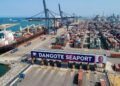
The problems are glaring. Port inefficiency remains one of the most notorious bottlenecks to trade in Nigeria. Congestion, inadequate automation, bureaucratic bottlenecks, and high charges make Nigerian ports among the most expensive in the region.
While Ghana’s Port of Tema has been modernized into a regional trade hub, Nigeria’s ports remain symbols of inefficiency, pushing cargo to neighbouring countries like Cotonou and Lomé. The promises to reform the port have been undermined by delays, corruption, and overlapping mandates with other agencies.
Environmental stewardship has also been neglected. Oil spills continue to devastate the Niger Delta, destroying livelihoods and ecosystems. Plastic wastes clog waterways, threatening fisheries and marine biodiversity. Coastal erosion is displacing communities along Lagos, Rivers, Bayelsa, and Delta shorelines. Yet, environmental protection remains an afterthought, treated as a side issue rather than a central obligation. Without urgent action, Nigeria’s marine environment will degrade beyond repair, robbing future generations of both sustenance and income.
Institutional rivalry further compounds these issues. Agencies such as NIMASA, NIWA, and NPA often operate in silos, duplicating functions and fighting turf wars instead of working toward a unified vision. The lack of a single-window platform for maritime trade and regulation ensures inefficiency thrives, frustrating businesses and increasing the cost of doing business. Rather than complementing each other, maritime agencies spend more time defending territories than delivering results.
By contrast, other nations have maximized their waters. Singapore, with no crude oil, built the world’s busiest transshipment hub. The UAE diversified beyond oil by turning Dubai into a maritime and logistics hub. Mauritius invested heavily in fisheries and marine tourism, while Ghana outpaced Nigeria with more efficient port services. Nigeria’s failure is not for lack of resources but for lack of leadership, vision, and discipline.
To change this trajectory, Nigeria must urgently adopt a comprehensive national blue economy policy with clear timelines, measurable targets, and a unified vision that integrates trade, fisheries, environment, and security. Modernizing port infrastructure and operations must go beyond loan announcements; automation, reduced bureaucracy, and a functioning port community system are crucial if Nigeria is to remain competitive under AfCFTA. Maritime security also needs to be strengthened, with the Deep Blue Project backed by sustainable funding and accountability, while the Navy, marine police, and NIMASA must work in harmony to rid Nigeria’s waters of piracy and oil theft.
Equally important is the need to prioritize environmental protection. Oil spill management must be strengthened, plastic pollution curbed, and coastal erosion mitigated through science-driven interventions. The ocean is not an infinite resource; it must be preserved. Alongside this, the overlapping mandates of NIMASA, NPA, NIWA, and others must end. A law-backed single-window regulatory system is overdue, and leadership from the Ministry of Marine and Blue Economy must emphasize coordination, not duplication. Finally, investment in human capital and innovation is vital. Nigeria must build capacity in shipbuilding, marine technology, fisheries management, and maritime law. Without skilled manpower, even the best policies will remain on paper.
The theme of this year’s World Maritime Day — Our Ocean, Our Obligation, Our Opportunity — is not poetic. It is a warning. Nations that neglect their obligations to the ocean will lose opportunities to those who act with vision and discipline. Nigeria’s maritime wealth is vast, but so is the cost of negligence. To remain asleep is to incur an unpayable debt to the future. The time to wake up is now.