The port system comprises of a web of suppliers and users of shipping services on one side and suppliers and users of ancillary services on the other.
Spread across this winding and complex web are players such as: Nigerian Ports Authourity Nigeria Customs Service and its service providers, shipping agents, Standards Organisation of Nigeria, National Agency for Food and Drugs Administration and Control, the terminal operators, importers (big and small), freight forwarders (or licensed customs agents), dockworkers, truck owners, drivers and motor boys, and a host of others.
Despite the reforms, on a good day and from as early as six o’clock in the morning, the frontage of Lagos ports (for example) is always busy; filled with people milling around the gates in their quest to gain access into the ports. Of this lot, only a few have genuine reasons to be in the port. The rest are only interested in how they can make a living from the system.
It is not difficult to ascertain to situate those who perpetuate fraud in the port system, even though the chain of importation is long. It can only be situated within the chain; that is, from the point an importer opens his Form ‘M’, to when the goods are actually procured and, packaged and freighted into Nigeria as an import and up to the point at which it is cleared form the port, and even enroute his warehouse.
In analyzing the phenomenon called ‘corruption’ in the port system, a lot of people tend to pin it down on stakeholders in the Nigerian port system, but that is an incorrect judgement. Our findings have revealed that corruption is (in most cases) engineered from the point at which a consignment is procured. A situation when an importer defies import guidelines and import prohibition orders of the federal government, makes the consignment and its importer complicit. And by implication, the licensed customs agent inherits the liability.
To ensure that the (offending) consignment is cleared out of the port, he (the clearing agent) begins to define ways, and this means being at the mercy of officials of government agencies, notably Customs officers.
The notoriety which the Nigeria Customs Service enjoys on the Corruption scale is not to say that other players are ‘saints’; virtually all the actors whom we have identified above are involved at one level or the other; albeit in varying degrees.
This brings us to the critical issue of causal factors in corruption in the Nigerian port system. We are of the opinion that transactions in the ports will be more devoid of corrupt tendencies if all stakeholders imbibe the tenets of integrity and best practices.
Stakeholders always rush to label Customs personnel as the most corrupt, but as much as we do not want to wish to draw a ‘league table’, we will like to look at them one after the other.
The question as to which of the active players in port operations is most culpable may not be quite straight forward. It will be difficult to exonerate any group from the cankerworm.
However, the tendency to take advantage will be reduced drastically if the importer does not violate the import guidelines and government policy on import prohibition.
It is equally less likely that government officials will toss him around and extort money from him, if the licensed customs agent makes genuine and honest declaration
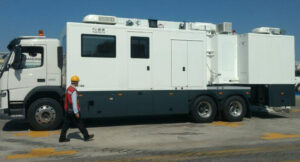
This takes us to the present: The Nigeria Customs Service, in an effort to modernise its operations have embraced acquisition of scanners, in addition to adoption of various IT facilities.
We recall that in January, the service had promised to acquire and install about 135 scanners at various entry points in the country.
Read Also: Do you agree that lack of scanners at seaport is aiding corruption?
Its Comptroller-General; Hameed Ali, who disclosed this on Wednesday in Abuja, noted that in the next two years, all points of entry and exit would have scanners.
While justifying the acquisition of scanners, he had admitted that, Customs cannot facilitate trade manually, hence the need to embrace electronic operations. He also confirmed that the mass acquisition of scanners, was part of e-Customs agenda.
Sadly, however, the promises to install scanners have either not materialized or the scanners have not worked in the few places where they had been installed.
It is curious that, scanners that were installed at Seme border, as well as Lagos and Onne seaports have never worked.
This is even as many people have expressed the belief that Nigeria should digitalise and automate port processes to reduce the influx of people, and also arrest the issue of corrupt practices.
From our informed understanding of the workings of the Nigerian port system, deployment of scanners to the nation’s seaport is not likely to stop corruption, but can only reduce bottlenecks in manual operation and increase sensitivity and turnaround time at the nation’s port.
Even when installed and functioning, we dare say that, scanners can not ensure total eradication of corruption, The best that can happen is that it is going to reduce bottlenecks associated with manual operation and it’s going to increase the sensitivity of what is in the container without going physical, it’s going to increase turn-around time and it’s going to be fast and will help the essence of 24 hours’ operations.
Sadly, the Nigeria Customs Service has denied Nigerians the benefits of doubts, owing to the failure to utilise the few scanners that were bought and installed. This has further aided the fears being expressed in several quarters that the service is never sincere about stamping-out corruption from the nation’s ports and land borders.
Kindly like us on Facebook