· “The National Single Window works in other countries. We should embrace it”
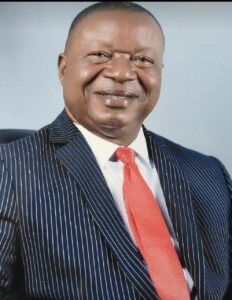
Dr. Chris Ebare, the First Nigerian maritime lawyer to become a chartered Shipbroker and immediate Past Chairman of the Nigerian Chapter of the Institute of Chartered Shipbrokers (ICS), in this exclusive interview with Joshua Yousouph delivers a comprehensive appraisal of Nigeria’s maritime sector in 2025. He assessed the performance of the Federal Ministry of Marine and Blue Economy, Nigeria’s return to Category C at the International Maritime Organization, the controversies surrounding the Cabotage Vessel Financing Fund (CVFF), the implications of global geopolitical tensions on shipping and oil trade, and the prospects of the National Single Window initiative. He also strongly advocates for deeper professionalism, strategic international financing partnerships, and greater integration of maritime experts within key maritime agencies to drive sustainable growth in the industry.
What do you think are the major achievements in the maritime sector last year?
Looking back at the beginning of 2025, I must say a lot was achieved by the Federal Ministry of Marine and Blue Economy, piloted by the Minister; Dr. Adegboyega Oyetola. I must give a very big kudos to him. He is an insurance specialist, not a maritime expert, yet he has been able to put one or two things together to ensure that the maritime sector in Nigeria has been given due recognition and that the right thing is done in the sector to some extent. When you look at the catalogue of achievements, it is a work in development. It has surpassed what we have witnessed in the sector in past years and past administrations. I must say a very big thank you to him, but there is still a lot more to be done.
In the area of revenue leakages, he has done absolutely well. Unlike before, when we were having so much worry about where certain platforms had done this or done that, I think he has been able to block all those loopholes. In terms of innovation, he has put one or two things in place in the area of ship registration and fast-tracking of many processes in the ports. Things have been working absolutely well, although we are yet to get there. Revenue leakages have been checked. But the training of personnel is an area where I am very much interested. A lot needs to be done — truly, a lot needs to be done. Finally, the ingestion of professionals — I mean maritime professionals — into the system is very important. Recruiting maritime experts and chartered shipbrokers into the system is where he needs to really buckle up. Today, I can count only a handful of chartered shipbrokers in NIMASA, the Nigerian Shippers’ Council, and the Nigerian Ports Authority. I want to really see professional experts in those fields, just as we have in other maritime countries, where you can count about 10 to 20 chartered shipbrokers or maritime experts in their institutions. That is the area where he needs to look into by way of encouragement. So far, so good. I will score him 80% in spite of his short stay in office.
Can we classify Nigeria’s return to IMO Category C as the major achievements of 2025?
Absolutely, yes. I deliberately did not mention it earlier, but I am happy you asked. The Minister has done well in that aspect of Nigeria coming back to Category C at the International Maritime Organization. For all these years, we would not even have been talking about Category C. We wouldn’t have been talking about Category B or A. If you look at some countries in Category A today, they are not really better than us, but for certain reasons, priority was placed differently. That is why now we are celebrating Category C — because we have gone back into oblivion.
Let me tell you why I am giving him great kudos. When he assumed office, this Minister launched out diplomatically to maritime nations. At one point, he was in Greece for close to two or three weeks. Many people did not even know. He was meeting maritime nations, maritime experts, lobbying, making friends, interacting with people who matter and who have voices in IMO. He stretched out the hand of fellowship to these nations. He did the same in Europe — reaching out to Singapore, Norway, Britain, the United States — countries that have strong voices at IMO and the UN. Unlike before, when Nigeria would carry lawmakers and large delegations to IMO meetings, spending dollars and euros without achieving anything, this minister went straight to the nations that matter. He lobbied them one-on-one. By the time he got to the IMO election, it was not difficult. These countries could say, “Oh yes, this man is our friend. He was with us. Whatever he is looking for regarding Category C, we should support him.”
It was a great diplomatic shuttle. A colleague of mine in Greece told me how humble the minister was. He never carried himself as a minister. Nigerians were able to interact with him one-on-one, even in his hotel. He openly encouraged other nations to come and invest in Nigeria. Today, we have something to hold on to. Something to be proud of. I think he has written his name in gold for bringing Nigeria back to its rightful place in the maritime community of nations.
Beyond bragging rights, what does Category C status benefit Nigeria?
A lot. Nigeria has always been classified as one of the great maritime nations in Africa and globally if you look at our waterways, resources, volume of in-and-out vessels, and trade volume. It is unquantifiable, compared to some other nations. Now, we have a voice. When Nigeria is in the committee of maritime nations, that recognition will be there. It is like seating arrangements — Category A sits in front, Category B next, then Category C. Before, we were nowhere near that recognition. Now we are there, even though we are still aiming for Category A. We now have voting power, recognition, and boldness. As a chartered shipbroker and maritime lawyer, I have attended international maritime seminars and conferences. I can tell you that respect matters. Now, when our representatives speak at IMO, they can say boldly, “We are from Nigeria, Category C.” That voice counts in decision-making and trading matters. These are major benefits.
On the Cabotage Vessel Financing Fund (CVFF), the Ministry launched a portal where applicants can access the funds. However, there are concerns that banks are unwilling to disburse the loans. What is your take?
Which loan? Which bank? I once granted an interview to a national daily where I said clearly: no Nigerian bank can finance the purchase of any good vessel — not to talk of a modern ocean-going vessel. My interview is still there. No Nigerian bank will finance a proper ocean-moving vessel. I am not talking about scrap or demolition vessels. Before the war in Ukraine, my law firm consulted for a company that produced ionized steel. They used to come to Nigeria to buy scrap — a lot of scrap. If you want to get a good vessel, you must partner. You must partner with international financial organizations in the maritime sector for you to acquire a worthy, seaworthy, ocean-going vessel. I am a chartered shipbroker. I am a Fellow of the Institute of Chartered Shipbrokers. I operate worldwide. So I understand what it takes to finance vessels. It is almost a temptation asking shipowners to go and collect ₦250 million or whatever amount is being mentioned under the CVFF portal. That amount cannot buy a good ocean-going vessel in today’s market. It is bad. You cannot use such money to buy a seaworthy vessel. Instead of asking local shipowners to go and collect funds that are not sufficient, the Ministry or the relevant authority should collaborate with international finance bodies. For example, you can approach reputable international insurance companies like HSB or other global marine insurers. They can provide guarantees and security that will enable international financiers to grant facilities. That is how it is done globally — you partner, you guarantee, you structure it properly.
Some inland waterways operators have suggested that the CVFF should instead be used to finance fibre boats and modern inland vessels. Do you agree?
Yes, I very much subscribe to that. If, for example, you want to buy a Corolla car worth N10–15 million, and you give me N5 million and say go and buy that same Corolla, does that make sense? It doesn’t. If you cannot finance the purchase of a proper ocean-going vessel, then better use the fund to finance inland waterway boats — fibre boats, canoes, modern river crafts. People in Warri, Badagry, and other riverine communities depend heavily on inland waterways. Encourage that sector. Boost local river transportation. If the available funds can only realistically finance inland boats, then let us focus there, instead of pretending that N250 million can buy a modern ocean-going vessel. Or better still, pool the fund together and use it like a corporate investment: buy one good, seaworthy vessel collectively. Register it properly. Let it operate commercially. Use the revenue generated to acquire additional vessels. Does that not make more sense than asking individuals to apply and receive insufficient funds?
There are legal concerns about the CVFF. The Act says the fund was contributed by shipowners and should only be given back to shipowners. Some argue the National Assembly may need to amend the law. What is your take?
You cannot collect money contributed by shipowners under a specific legal framework and then divert it to something else, without proper process. I was only making a proposition earlier. But legally speaking, if shipowners contributed the money under an Act, then that Act governs how the money must be used. There has been controversy in the past about how much was generated, interest accrued, and transparency issues. I think the present Minister of Marine and Blue Economy should convene a roundtable conference — bring in maritime experts, shipowners, and stakeholders — to discuss how this fund should be managed and disbursed. That is better than this continuous “send your BVN, send your application, come and take N500 million or N1 billion” without clarity. Let there be transparency, professional engagement, and consensus.
On the US–Iran tensions and the closure of the Strait of Hormuz, how could that affect Nigeria?
The Strait of Hormuz is a very strategic sea route. Most global oil shipments pass through there. With conflict in that region, war risk insurance will go up. Insurance premiums will increase significantly. When risk increases, insurers increase premiums. It is like driving a N400 million car through a dangerous area — the insurer will charge you more because the risk of damage is higher. So yes, war risk premiums will rise. However, Nigeria may indirectly benefit from higher crude oil prices. If supply from some Middle Eastern countries is disrupted, countries will look for alternative suppliers. Nigeria, not being at the center of the conflict, could have export opportunities — provided we operate with vigilance and proper security awareness. But we must be cautious. Satellite tracking, maritime surveillance, global monitoring — everything is heightened during wartime. So while some countries may suffer severe setbacks, others like Nigeria may benefit from increased oil prices.
The National Single Window is the talk of the town currently. However, some fear Nigerians may try to circumvent the system. What is your view?
The National Single Window is a welcome development. I do not know why we always assume that Nigeria cannot implement good systems. Why do we always assume deviance? The National Single Window works in other countries. We should embrace it. We should believe that once implementation begins fully, it will succeed. If properly implemented, Nigeria will generate more revenue, reduce leakages, and improve transparency. We must change our mindset and stop assuming failure before implementation.